
Benelux In-vitro Diagnostic Market Size and Forecast by Product Type, Technology, Application, Disease Type, End User, and Distribution Channel: 2019-2033
Oct 2025
| Format:

 |
Pages: 110+
|
Type: Sub-Industry Report
|
Authors:
Mahesh Y
(Assistant Research Manager)
|
Pages: 110+
|
Type: Sub-Industry Report
|
Authors:
Mahesh Y
(Assistant Research Manager)
MARKET OUTLOOK
Benelux In-vitro Diagnostic Market Outlook: The Innovation Gateway to Europe In-vitro Diagnostic Transformation
The Benelux region, comprising Belgium, the Netherlands, and Luxembourg, stands as a pivotal entry-point for medical technology innovation in Europe. With its strategic location, high R&D intensity, and integrated healthcare infrastructure, the region serves as a fertile ground for early adoption of diagnostic technologies and clinical validation of novel assays. The presence of internationally recognized regulatory bodies, well-equipped laboratories, and advanced clinical trial frameworks has positioned Benelux as a prime testbed for in-vitro diagnostic (IVD) market advancement.
According to DataCube Research, the Benelux In-vitro Diagnostic Market is valued at USD 1.29 billion in 2025 and is projected to reach USD 1.92 billion by 2033, growing at a CAGR of 5.1% from 2025 to 2033. This growth is attributed to the region’s robust emphasis on healthcare innovation, precision diagnostics, and digital integration in laboratory operations. Governments and health ministries across Benelux, such as the Federal Public Service Health of Belgium and the Dutch Ministry of Health, Welfare and Sport, are channeling resources into diagnostic modernization and supporting early technology deployment across hospitals and research facilities.
High Per-capita Health Spending and Tech-forward Ecosystem Drive Diagnostic Growth
The growth trajectory of the Benelux in-vitro diagnostic industry is largely fueled by high per-capita healthcare expenditure and a culture of technological curiosity among clinicians. The Netherlands and Belgium rank among the top EU economies in healthcare spending per citizen, reflecting strong public and private sector commitment to diagnostic infrastructure enhancement. This funding capacity enables laboratories and hospitals to adopt advanced instruments and automated reagent systems, ensuring faster turnaround times and higher diagnostic accuracy.
Moreover, Benelux countries are leveraging data registries and national biobanks to support personalized diagnostics and predictive analytics in disease management. Strong usage of registries in oncology, cardiovascular health, and infectious diseases has improved clinical outcomes through early intervention. These initiatives align with broader EU frameworks promoting data-driven healthcare under programs supported by the European Commission for Health and Food Safety. The region’s emphasis on early tech adoption continues to make it a magnet for startups seeking scalable market access.
Fragmentation and Cross-border Procurement Complexity Hamper Market Scalability
Despite strong innovation credentials, the Benelux in-vitro diagnostic sector faces structural challenges that constrain unified market scaling. The region’s composition of three distinct countries with varying healthcare policies and reimbursement mechanisms creates administrative complexity for manufacturers. Cross-border procurement remains a critical restraint, as price negotiations and tendering systems differ between Belgium, the Netherlands, and Luxembourg.
Small market size and high competition intensify price sensitivity, pushing suppliers to adopt lean operational models. Moreover, the pressure to balance innovation with cost efficiency limits the penetration of high-end diagnostic instruments in smaller facilities. Regulatory variations in post-market surveillance and product labeling across the three countries further complicate commercialization. This fragmentation underlines the need for harmonized procurement and shared innovation frameworks to optimize resource utilization across the Benelux diagnostic landscape.
Collaborative Healthcare Models and Cross-border Patient Flows Shape Market Dynamics
The Benelux region’s progressive healthcare ecosystem fosters collaboration among public and private entities, accelerating the adoption of new diagnostic technologies. A major trend is the rise of early adopter clinics and innovation hubs that pilot molecular testing platforms and digital pathology systems before broader EU rollout. Institutions in Amsterdam, Brussels, and Luxembourg City frequently participate in multicenter trials and act as proof-of-concept environments for global diagnostic brands seeking EU entry.
Another defining trend is cross-border patient mobility, which supports the demand for harmonized diagnostic quality standards. Patients often seek specialized services across borders, prompting healthcare providers to synchronize diagnostic protocols and data-sharing frameworks. Public-private partnerships (PPPs) have also flourished, enabling investment in laboratory automation, reagent sustainability, and bioinformatics integration. These partnerships not only improve diagnostic accessibility but also strengthen the region’s global competitiveness in healthcare innovation.
Emerging Opportunities Through Robotics and Collaborative Procurement
Opportunities in the Benelux in-vitro diagnostic market are expanding rapidly with the advent of pilot robotics programs and AI-integrated testing systems. Hospitals in the Netherlands and Belgium have begun automating sample handling, reagent mixing, and digital result validation, substantially improving efficiency and reducing human error. Such pilot initiatives have attracted the attention of multinational firms looking to demonstrate scalability in controlled European settings.
Additionally, the formation of pan-Benelux purchasing consortia represents a strategic evolution in procurement, helping institutions pool resources for better pricing and unified technology adoption. These consortia enable economies of scale in acquiring instruments, reagents, and diagnostic software, fostering equitable access to advanced healthcare technologies. Collaboration between academia, healthcare systems, and leading manufacturers such as bioMérieux further enriches the region’s research output, as evidenced by a rising number of KOL publications validating new diagnostic methodologies.
Competitive Landscape: Pilot Installations and Cross-border Partnerships Define Growth Path
The competitive landscape of the Benelux in-vitro diagnostic ecosystem is characterized by strong multinational presence combined with local innovation initiatives. Industry leaders like Abbott Laboratories, Siemens Healthineers, and bioMérieux maintain deep partnerships with academic hospitals to advance translational diagnostics. Pilot flagship hospital installations across Amsterdam, Brussels, and Luxembourg City have showcased the efficiency of new reagent systems, influencing national procurement trends and reinforcing trust among public buyers.
In recent years, collaborative projects between Benelux hospitals and research centers have focused on enhancing diagnostic precision for oncology, infectious disease, and autoimmune disorders. Leveraging cross-border centers for scale, these institutions aim to unify regional laboratory standards while promoting transparent performance benchmarking. The continuous publication of local outcomes and trial data reinforces Benelux’s image as an innovation-forward market that balances quality, affordability, and scalability, making it a preferred hub for diagnostic validation and regulatory alignment in Europe.
*Research Methodology: This report is based on DataCube’s proprietary 3-stage forecasting model, combining primary research, secondary data triangulation, and expert validation.
[Learn more]
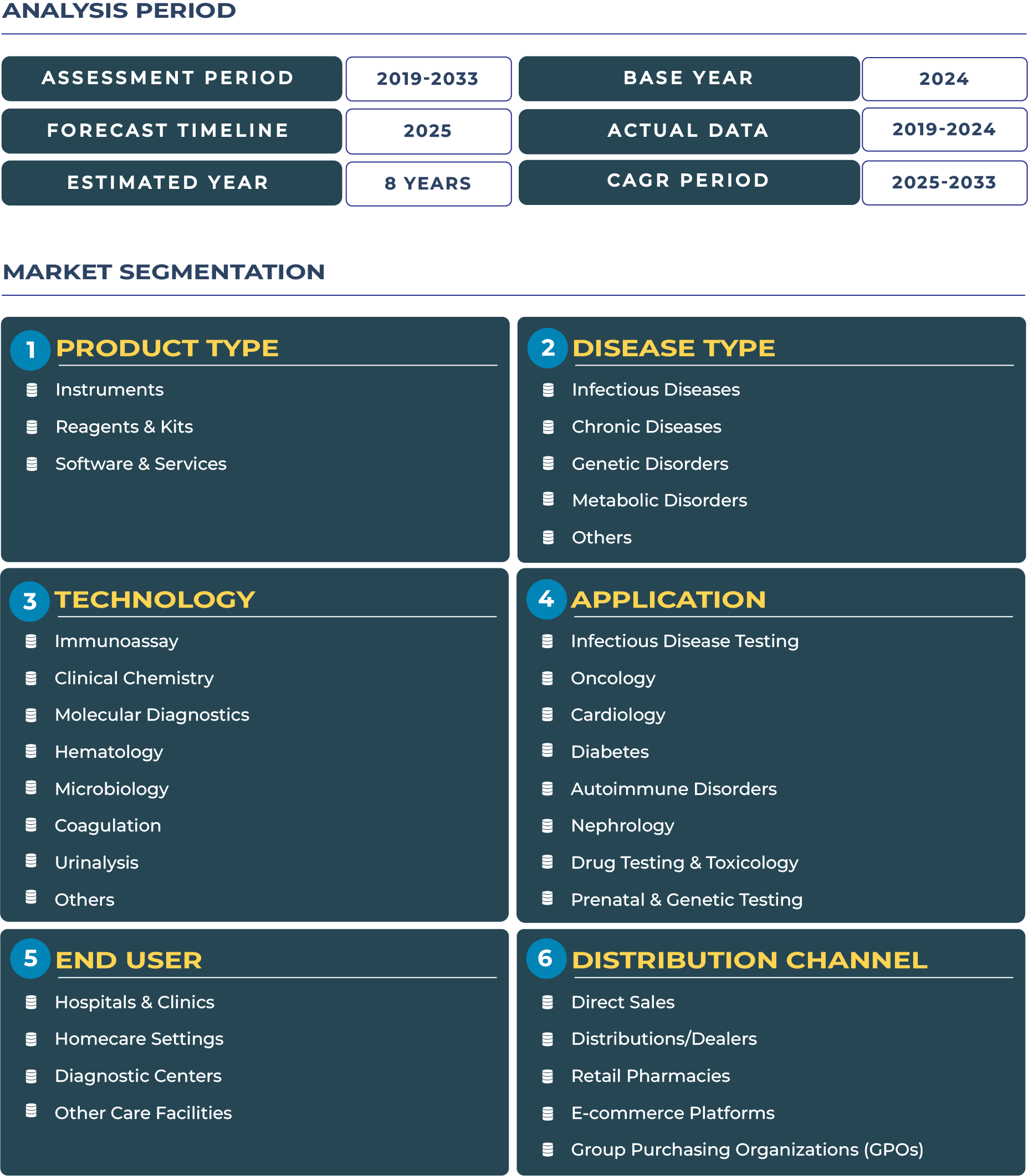
Benelux In-vitro Diagnostic Market Segmentation
Frequently Asked Questions
Benelux serves as an innovation gateway by offering a harmonized regulatory environment, high clinical trial participation, and well-networked healthcare infrastructure that enable early-stage validation of diagnostic and orthopedic technologies before EU-wide commercialization.
Startups face hurdles such as small fragmented markets, varying reimbursement systems, and competitive tender-based procurement, which complicate scaling and price negotiation across Belgium, the Netherlands, and Luxembourg.
Clinical trials in Benelux enhance IVD innovation by generating high-quality real-world data, fostering early adoption, and improving regulatory alignment for global market access. The region’s clinical excellence supports rapid diagnostic validation.
Related Reports

Zimbabwe SaaS Market Size | 2019-2034
- Report ID: IT1872 | Coverage: Country |
- Category: Information Technology | Sub-Category: Cloud Computing Technology |
- Published Date: Dec 2025 | US$495 |
Taiwan Investment Banking Market Size | 2019-2033
- Report ID: BAF864 | Coverage: Country |
- Category: Banking and Finance | Sub-Category: Banking Services |
- Published Date: Oct 2025 | US$495 |
Bahrain Rural Banking Market Size | 2019-2033
- Report ID: BAF964 | Coverage: Country |
- Category: Banking and Finance | Sub-Category: Banking Services |
- Published Date: Oct 2025 | US$495 |
Argentina Diagnostic Imaging Devices Market Size | 2019-2033
- Report ID: HEA350 | Coverage: Country |
- Category: Healthcare | Sub-Category: Medical Devices |
- Published Date: Nov 2025 | US$495 |
Zimbabwe SaaS Market Size | 2019-2034
- Report ID: IT1872 | Coverage:Country |
- Category:Information Technology | Sub-Category: Cloud Computing Technology |
- Published Date: Dec 2025 |US$495 |
Taiwan Investment Banking Market Size | 2019-2033
- Report ID: BAF864 | Coverage:Country |
- Category:Banking and Finance | Sub-Category: Banking Services |
- Published Date: Oct 2025 |US$495 |
Bahrain Rural Banking Market Size | 2019-2033
- Report ID: BAF964 | Coverage:Country |
- Category:Banking and Finance | Sub-Category: Banking Services |
- Published Date: Oct 2025 |US$495 |
Argentina Diagnostic Imaging Devices Market Size | 2019-2033
- Report ID: HEA350 | Coverage:Country |
- Category:Healthcare | Sub-Category: Medical Devices |
- Published Date: Nov 2025 |US$495 |
Why Choose Us

24/5 Research Support
Get your queries resolved prior to and post purchasing research study

Customize As Per Specific Requirements
Get in-depth analysis based on your tailored research needs

Expertise in Tracking Niche Markets
Comprehensive view of latest technologies and opportunities across markets

360-Degree Analysis
Fact-based insights derived through supply & demand side analysis

Assured Quality
Deliver most accurate industry insights to maintain research quality

Information Security
Your confidential and personal data is secure and safe