
GCC Diabetes Care Devices Market Size and Forecast by Product Type, Diabetes Type, End User, Distribution Channel, Workflow Stage, and Revenue Model: 2019-2033
Sep 2025
| Format:

 |
Pages: 160+
|
Type: Sub-Industry Report
|
Authors:
Mahesh Y
(Assistant Research Manager)
|
Pages: 160+
|
Type: Sub-Industry Report
|
Authors:
Mahesh Y
(Assistant Research Manager)
MARKET OUTLOOK
GCC Diabetes Care Devices Market Outlook: Medical Tourism and Premium Healthcare Driving High-Value Growth
The Gulf Cooperation Council (GCC) has positioned itself as a premium healthcare hub, with medical tourism and world-class hospitals fueling demand for advanced diabetes care solutions. Across the UAE, Saudi Arabia, and Qatar, investments in specialized diabetes centers, coupled with inbound medical travelers seeking high-quality treatment, justify the strong appetite for premium devices. High-value offerings such as insulin pumps, continuous glucose monitoring (CGM) systems, and smart diabetes management platforms are increasingly bundled with hospital services to create comprehensive patient care packages. In 2025, the GCC diabetes care devices market is projected at USD 330.0 million and expected to expand to USD 455.1 million by 2033, growing at a CAGR of 4.1%. This growth is underpinned by rising lifestyle-related diabetes prevalence, sophisticated healthcare infrastructure, and robust private-sector investments. The GCC’s unique advantage lies in its ability to attract medical tourists, sustain high average selling prices (ASP), and offer device-hospital bundles unmatched in emerging economies.
Premium Medical Tourism Models Strengthening GCC Diabetes Care Devices Industry
The GCC diabetes care devices sector is evolving within a premium healthcare ecosystem that thrives on high-value patient experiences. Medical tourism, supported by advanced hospitals in Dubai, Riyadh, and Doha, creates strong demand for devices such as smart insulin pens, CGMs, and integrated digital platforms. Government initiatives, including the UAE Ministry of Health and Prevention diabetes awareness programs, are accelerating early screening and management. This is further reinforced by hospital partnerships that integrate devices into personalized care plans for international patients. From 2025 to 2033, steady market expansion is anticipated, driven by inbound patient flows, rising insurance penetration, and private hospital procurement. Despite regional challenges such as geopolitical tensions and global supply chain pressures, the GCC remains resilient due to its strong purchasing power, regulatory clarity, and diversification into premium healthcare services. The strategic blend of advanced hospital networks and medical tourism flows ensures that the GCC will continue to lead in high-end diabetes care solutions.
Drivers & Restraints: Understanding the Unique Push and Pull Factors in the GCC Diabetes Care Devices Ecosystem
High Per-Capita Spend and Advanced Private Hospitals Fuel Growth
High per-capita income and advanced healthcare infrastructure are core growth drivers for the GCC diabetes care devices industry. The region is home to some of the world’s most advanced private hospitals, which prioritize early adoption of innovative technologies. For example, partnerships between hospitals in Abu Dhabi and multinational device companies have led to the deployment of integrated CGM systems that enhance patient outcomes. Additionally, private insurance coverage across Saudi Arabia and the UAE makes insulin delivery systems and smart monitoring devices accessible to a wider patient population. These elements collectively push the sector toward sustained premium adoption.
Limited Population Size and Dependence on Expatriate and Medical Tourism Demand
While margins remain strong, the GCC faces structural restraints due to its relatively small population base. Reliance on expatriates and medical tourists for driving volume presents a challenge in achieving long-term scale. Import dependency on advanced devices adds to cost pressures, making affordability a restraint for lower-income segments of the population. Furthermore, geopolitical instability and supply chain vulnerabilities—such as those seen during global pandemic disruptions—highlight the fragility of device availability. These factors limit the depth of penetration for devices like insulin pumps, even as high-end hospitals push premium adoption.
Trends & Opportunities: Leveraging Bundled Premium Services and Hospital Procurement in the GCC Diabetes Care Devices Market
Premium Device and Service Bundling Becoming the Market Norm
A defining trend in the GCC diabetes care devices market is the integration of premium devices into hospital service bundles. Leading hospitals in Dubai and Doha now offer packages combining CGM devices, insulin pump therapies, and follow-up consultations as part of their medical tourism offerings. This trend enhances patient convenience while increasing device adoption rates. Such bundling strategies allow providers to command premium pricing while also differentiating their services from global competitors.
Private Hospital Procurement Driving Long-Term Market Opportunities
Private hospital networks across the GCC are expanding procurement programs for diabetes care devices. Hospitals in Saudi Arabia and the UAE, for instance, are securing long-term contracts with multinational suppliers to ensure continuous access to CGMs and insulin delivery systems. These procurement deals create stable revenue streams for manufacturers and allow hospitals to build loyalty among international patients. The emphasis on hospital-driven procurement further elevates the GCC as a leader in the diabetes care devices ecosystem, offering consistent opportunities for global and regional players.
Regional Analysis by Country
Saudi Arabia
Saudi Arabia is central to the GCC diabetes care devices landscape, with Vision 2030 reforms strengthening advanced hospital infrastructure. Strong insurance penetration supports CGM and insulin pump adoption.
United Arab Emirates
The UAE benefits from its medical tourism appeal, particularly in Dubai. Private hospitals lead procurement of premium diabetes care devices, positioning the country as a hub for advanced healthcare solutions.
Kuwait
Kuwait is strengthening early diagnosis programs through public-private collaboration. The diabetes care devices sector is dominated by SMBG kits, though uptake of smart monitoring systems is gradually expanding.
Qatar
Qatar leverages its high-income healthcare system to adopt advanced insulin delivery systems and CGMs. Hospital partnerships support medical tourism-driven demand for bundled premium care packages.
Oman
Oman is improving diabetes care access through public health programs, with SMBG and affordable insulin pens forming the foundation of adoption, while premium devices remain hospital-centered.
Bahrain
Bahrain’s diabetes care ecosystem is defined by insurance-backed access and growing hospital procurement, particularly for blood glucose monitoring and insulin delivery devices.
Competitive Landscape: Premium Partnerships and Hospital-Centric Expansion Define GCC Diabetes Care Devices Industry
The GCC competitive landscape is characterized by multinational dominance alongside strong hospital partnerships. Companies like Abbott, Medtronic, and Dexcom are shaping the market with advanced product portfolios. In August 2024, Abbott announced a global partnership with Medtronic to co-develop integrated CGM and automated insulin delivery (AID) systems, a move aligned with GCC’s hospital-driven commercial strategies. This highlights the importance of premium bundling and channeling devices through hospital networks. Local distributors are also strengthening their roles by securing procurement contracts that ensure seamless patient access. The ability to integrate devices into hospital workflows and medical tourism packages is emerging as the core differentiator in this high-value regional market.
*Research Methodology: This report is based on DataCube’s proprietary 3-stage forecasting model, combining primary research, secondary data triangulation, and expert validation.
[Learn more]
GCC Diabetes Care Devices Market Segmentation
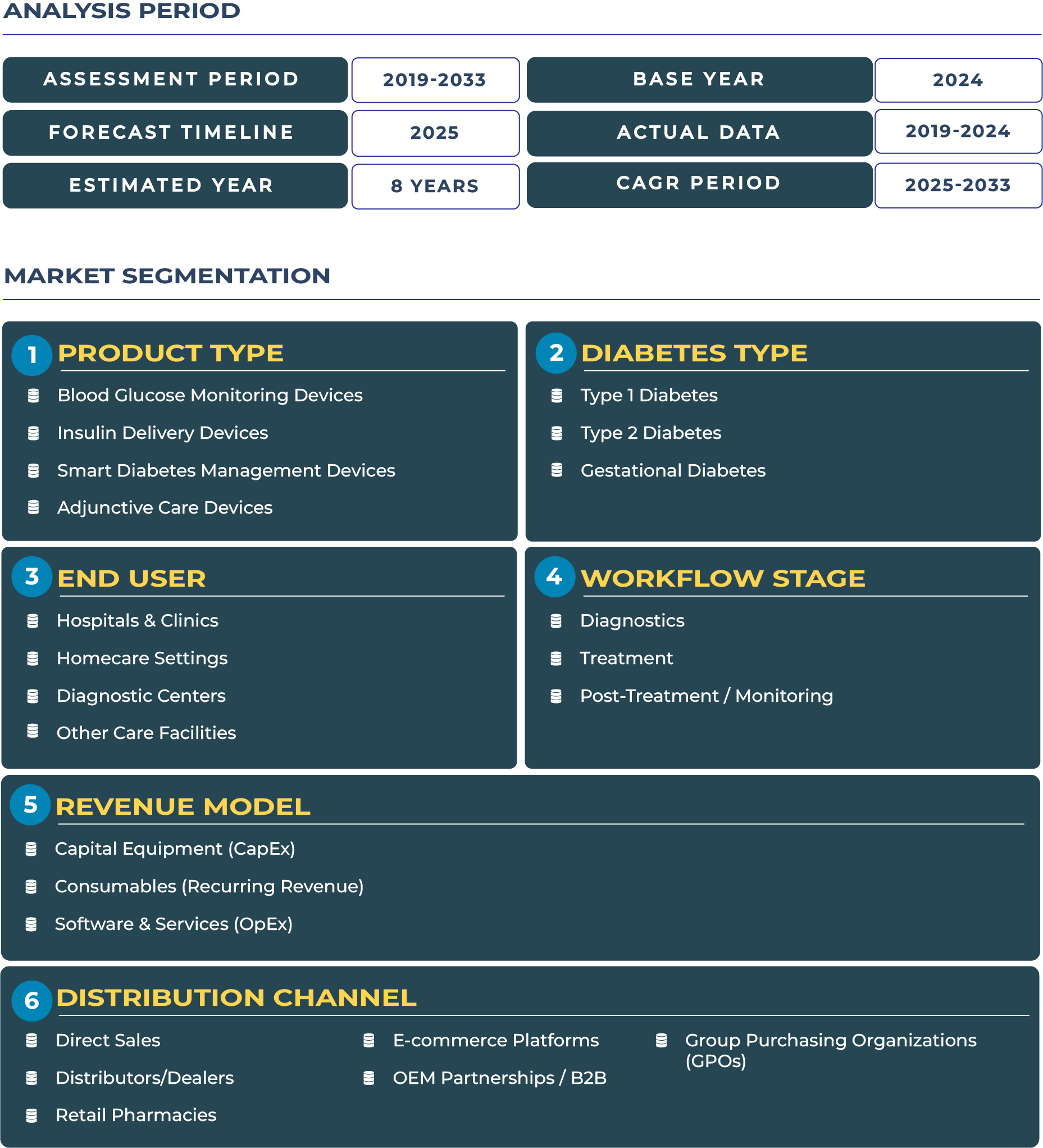
GCC Diabetes Care Devices Market Countries Covered

Frequently Asked Questions
Government-backed initiatives, combined with private hospital expansion and medical tourism, are accelerating device adoption by creating premium demand channels and ensuring early access to advanced diabetes technologies.
High device costs, coupled with dependency on imports and smaller populations, constrain large-scale CGM and insulin pump adoption, making affordability a critical challenge for broad-based penetration.
Strategies focusing on integrating telehealth platforms with CGM and insulin delivery systems, alongside hospital-led digital monitoring programs, provide effective models for advancing device adoption in GCC countries.
Related Reports

Benelux PaaS Market Size | 2019-2033
- Report ID: IT1884 | Coverage: Country |
- Category: Information Technology | Sub-Category: Cloud Computing Technology |
- Published Date: Dec 2025 | US$495 |
Poland Private Banking Market Size | 2019-2033
- Report ID: BAF919 | Coverage: Country |
- Category: Banking and Finance | Sub-Category: Banking Services |
- Published Date: Oct 2025 | US$495 |
Oman Private Banking Market Size | 2019-2033
- Report ID: BAF980 | Coverage: Country |
- Category: Banking and Finance | Sub-Category: Banking Services |
- Published Date: Nov 2025 | US$495 |
Benelux PaaS Market Size | 2019-2033
- Report ID: IT1884 | Coverage:Country |
- Category:Information Technology | Sub-Category: Cloud Computing Technology |
- Published Date: Dec 2025 |US$495 |
Poland Private Banking Market Size | 2019-2033
- Report ID: BAF919 | Coverage:Country |
- Category:Banking and Finance | Sub-Category: Banking Services |
- Published Date: Oct 2025 |US$495 |
Oman Private Banking Market Size | 2019-2033
- Report ID: BAF980 | Coverage:Country |
- Category:Banking and Finance | Sub-Category: Banking Services |
- Published Date: Nov 2025 |US$495 |
Why Choose Us

24/5 Research Support
Get your queries resolved prior to and post purchasing research study

Customize As Per Specific Requirements
Get in-depth analysis based on your tailored research needs

Expertise in Tracking Niche Markets
Comprehensive view of latest technologies and opportunities across markets

360-Degree Analysis
Fact-based insights derived through supply & demand side analysis

Assured Quality
Deliver most accurate industry insights to maintain research quality

Information Security
Your confidential and personal data is secure and safe