
Hong Kong Banking Market Size and Forecast by Banking Type, Service Type, Customer Type, Revenue Source, and Delivery Channel: 2019-2033
Oct 2025
| Format:

 |
Pages: 110+
|
Type: Industry Report
|
Authors:
Jayson Gomes
(Manager – BFSI)
|
Pages: 110+
|
Type: Industry Report
|
Authors:
Jayson Gomes
(Manager – BFSI)
MARKET OUTLOOK
Hong Kong Banking Market: Balancing Liquidity Innovation with Cyber Resilience and Tokenized Finance Growth
Hong Kong’s banking market is entering a new strategic phase where cybersecurity reinforcement, liquidity optimization, and tokenized financial platforms are becoming key pillars of operational stability. The region’s role as a global financial hub, coupled with its open economic structure and strategic proximity to mainland China, positions its banking ecosystem at the intersection of traditional finance and next-generation fintech innovation. As the sector embraces Buy Now Pay Later growth and tokenized investment products, banks are deploying advanced cybersecurity frameworks to maintain trust and regulatory compliance.
Note:* The banking market size refers to the total revenue generated by banks through interest income, non-interest income, and other ancillary sources.
Market Outlook: Hong Kong’s Banking Sector Fortifies Its Foundations Through Digital Security and Liquidity Innovation
Hong Kong’s banking market is projected to reach USD 102.5 billion by 2025 and further expand to USD 129.3 billion by 2033, growing at a CAGR of 2.9% from 2025 to 2033. This moderate but stable growth is underpinned by the region’s robust treasury operations, regulatory clarity, and its role as an international offshore RMB clearing center. Liquidity management and cyber resilience are becoming strategic imperatives as rising capital costs and regional geopolitical complexities reshape lending and investment strategies.
Retail banking continues to leverage BNPL solutions and mobile-first platforms to drive transaction volumes, while corporate and private banking segments are focusing on liquidity optimization and tokenized asset strategies to attract international capital. Hong Kong’s strategic position as a financial gateway to mainland China supports cross-border financing, syndicated loans, and investment banking activities that underpin its financial system.
Drivers & Restraints: Liquidity Innovations Fuel Growth While Rising Costs and Payment Fragmentation Pose Hurdles
Liquidity and Treasury Innovations Reshape Hong Kong’s Banking Value Chain
One of the strongest growth drivers in the Hong Kong banking industry is the modernization of treasury operations and liquidity frameworks. Banks are increasingly adopting automated liquidity pools, real-time treasury dashboards, and cross-border liquidity management solutions to navigate volatile interest rate environments. The Hong Kong Monetary Authority (HKMA) has introduced multiple initiatives to enhance interbank liquidity, including the refinement of its Exchange Fund Bills and Notes Programme and new liquidity risk management guidance. Automation of core banking processes is helping reduce operational costs and improving transaction efficiency, enabling banks to remain competitive amid structural shifts.
Rising Cost of Capital and Fragmented Standards Constrain Momentum
Despite its advantages, the Hong Kong banking sector faces growth restraints from rising capital costs and fragmented payment standards. With global interest rates tightening, funding costs for Hong Kong-based banks have increased, affecting credit issuance and investment appetite. Additionally, while the region is technologically advanced, interoperability between different payment providers and cross-border platforms remains inconsistent. This lack of harmonization has created integration challenges for both retail banking customers and commercial trade ecosystems, leading to higher transaction costs and slower adoption of new digital payment products.
Trends & Opportunities: BNPL Expansion, API-First Banking, and Fractionalized Investments Set the Course
BNPL Financing and API-Driven Ecosystems Gain Strategic Relevance
Hong Kong is witnessing a significant rise in BNPL financing adoption, particularly in the retail banking sector. Digital-first consumers and SMEs are embracing flexible payment solutions that enhance liquidity and purchasing power. Banks are integrating BNPL offerings within mobile banking apps to retain users within their ecosystem, while fintech partnerships are enabling rapid merchant onboarding. In parallel, API-first banking frameworks are accelerating open banking initiatives. By standardizing interfaces and enabling secure third-party integrations, banks are creating more adaptive and competitive service architectures that support faster product launches and seamless customer experiences.
Fractionalized Property Investment and BNPL for Trade Finance Open New Avenues
Opportunities are expanding in fractional property investment platforms and BNPL solutions tailored for SMEs engaged in export-import activities. Hong Kong’s strong real estate market combined with the introduction of tokenized investment platforms is allowing investors to access property assets through fractionalized ownership models. This is opening wealth management and private banking products to new investor categories. Similarly, BNPL solutions for SMEs involved in cross-border trade are offering improved cash flow management and reduced dependency on traditional credit lines, supporting economic diversification.
Government Regulation: Robust Supervisory Framework Anchors Market Stability
Regulatory clarity and proactive supervision remain central to Hong Kong’s banking ecosystem. The HKMA oversees banking operations, prudential regulations, and cybersecurity mandates, ensuring financial stability and international compliance. Initiatives such as the Faster Payment System (FPS) have set interoperability standards for retail payments, while regulatory sandboxes support innovation by enabling pilot testing of digital finance products in controlled environments. Enhanced cybersecurity frameworks, mandatory stress testing, and liquidity coverage ratios have strengthened systemic resilience against cyber threats and financial shocks.
Key Impacting Factors: Trust Levels and Consumption Behavior Shape Market Trajectory
Trust in banking institutions remains one of the defining factors for market stability in Hong Kong. Despite digitalization, consumers place a premium on data protection and transaction security. Any breach can lead to rapid shifts in consumer preferences toward alternative financial platforms. In parallel, the evolving balance between savings and consumption behavior influences deposit volumes and credit demand. Rising living costs and interest rate changes have increased precautionary savings among households, affecting lending activity in retail banking. These behavioral dynamics, combined with macroeconomic factors such as trade dependencies and geopolitical risks, shape overall market performance.
Competitive Landscape: Strategic Shifts Toward Digitalization and Cybersecurity Reinforcement
The competitive environment of the Hong Kong banking sector is dominated by both global and domestic institutions. HSBC continues to play a central role, leveraging its global network to expand wealth management and commercial banking services. In 2024, HSBC announced enhanced cybersecurity investments focusing on real-time threat monitoring and encryption frameworks to safeguard digital transactions. Local banks are increasingly collaborating with fintech companies to launch tokenized investment products and BNPL solutions, intensifying competition in retail banking. The strategic focus across the sector is on reinforcing cybersecurity infrastructure, diversifying digital products, and maintaining regulatory compliance to sustain competitive advantages in a low-growth environment.
Conclusion: Cyber Resilience and Tokenized Finance Will Define the Next Decade
Hong Kong’s banking sector stands at a pivotal intersection where cyber resilience, tokenized asset platforms, and BNPL growth will collectively shape its trajectory over the next decade. While moderate economic growth and rising capital costs temper expansion, the sector’s ability to integrate innovative financing models with secure digital ecosystems ensures long-term competitiveness. Regulatory foresight, consumer trust, and liquidity innovations are likely to play a decisive role in defining market leadership. Banks that balance innovation with operational security will emerge as frontrunners in Hong Kong’s evolving banking landscape.
*Research Methodology: This report is based on DataCube’s proprietary 3-stage forecasting model, combining primary research, secondary data triangulation, and expert validation.
[Learn more]
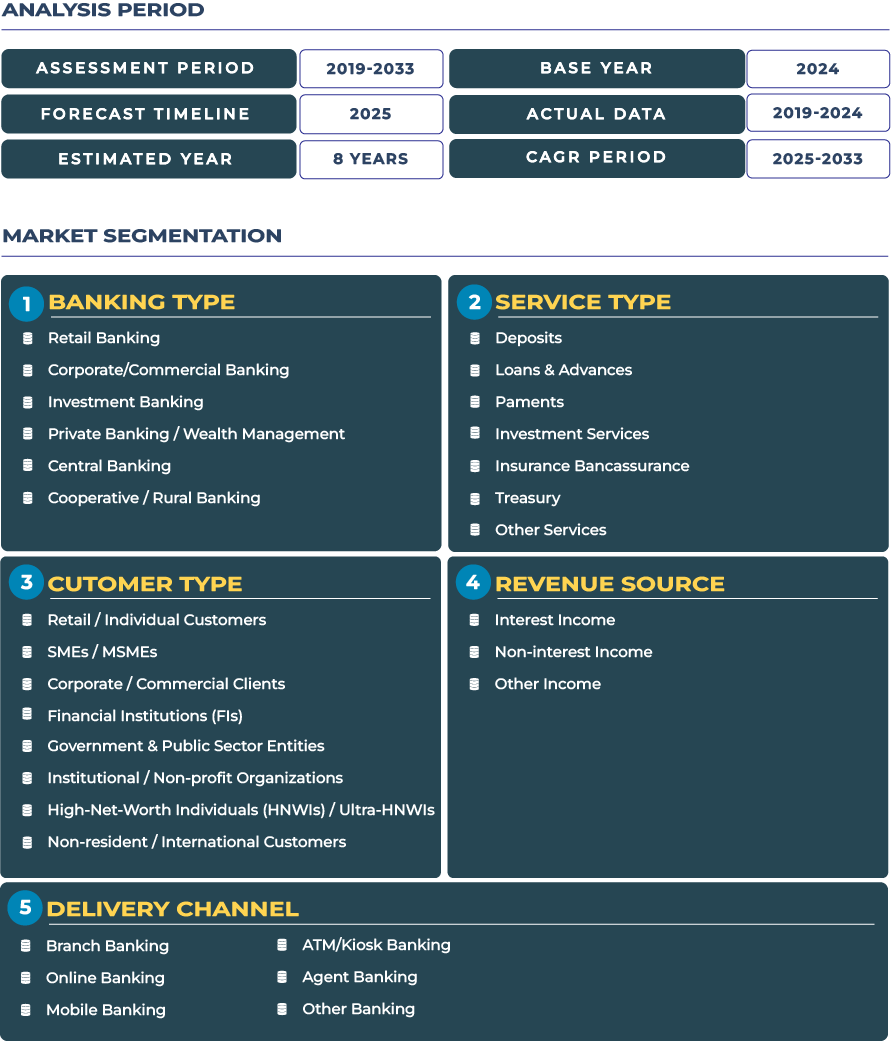
Hong Kong Banking Market Segmentation
Frequently Asked Questions
Banks are deploying real-time monitoring, advanced encryption protocols, and regulatory-aligned frameworks to protect customer data. Investments in cybersecurity infrastructure are becoming a board-level priority to maintain trust.
BNPL services are reshaping retail banking by integrating flexible financing within digital banking platforms, increasing customer engagement, and expanding transaction volumes across consumer segments.
Tokenization platforms allow fractional ownership of property and other assets, expanding access to wealth management products and introducing new revenue streams for banks and investors alike.
Related Reports

India Fintech-enabled Neobanking Market Size | 2019-2033
- Report ID: BAF527 | Coverage: Country |
- Category: Banking and Finance | Sub-Category: FinTech |
- Published Date: Jan 2026 | US$495 |
North America Orthopedic Devices Market Size | 2019-2033
- Report ID: HEA211 | Coverage: Regional |
- Category: Healthcare | Sub-Category: Medical Devices |
- Published Date: Oct 2025 | US$1,345 |
UAE Corporate Banking Market Size | 2019-2033
- Report ID: BAF809 | Coverage: Country |
- Category: Banking and Finance | Sub-Category: Banking Services |
- Published Date: Oct 2025 | US$495 |
Indonesia Private Banking Market Size | 2019-2033
- Report ID: BAF931 | Coverage: Country |
- Category: Banking and Finance | Sub-Category: Banking Services |
- Published Date: Oct 2025 | US$495 |
India Fintech-enabled Neobanking Market Size | 2019-2033
- Report ID: BAF527 | Coverage:Country |
- Category:Banking and Finance | Sub-Category: FinTech |
- Publishing Soon |US$495 |
North America Orthopedic Devices Market Size | 2019-2033
- Report ID: HEA211 | Coverage:Regional |
- Category:Healthcare | Sub-Category: Medical Devices |
- Published Date: Oct 2025 |US$1,345 |
UAE Corporate Banking Market Size | 2019-2033
- Report ID: BAF809 | Coverage:Country |
- Category:Banking and Finance | Sub-Category: Banking Services |
- Published Date: Oct 2025 |US$495 |
Indonesia Private Banking Market Size | 2019-2033
- Report ID: BAF931 | Coverage:Country |
- Category:Banking and Finance | Sub-Category: Banking Services |
- Published Date: Oct 2025 |US$495 |
Why Choose Us

24/5 Research Support
Get your queries resolved prior to and post purchasing research study

Customize As Per Specific Requirements
Get in-depth analysis based on your tailored research needs

Expertise in Tracking Niche Markets
Comprehensive view of latest technologies and opportunities across markets

360-Degree Analysis
Fact-based insights derived through supply & demand side analysis

Assured Quality
Deliver most accurate industry insights to maintain research quality

Information Security
Your confidential and personal data is secure and safe