
MEA Banking Market Size and Forecast by Banking Type, Service Type, Customer Type, Revenue Source, and Delivery Channel: 2019-2033
Oct 2025
| Format:

 |
Pages: 160+
|
Type: Industry Report
|
Authors:
Jayson Gomes
(Manager – BFSI)
|
Pages: 160+
|
Type: Industry Report
|
Authors:
Jayson Gomes
(Manager – BFSI)
MARKET OUTLOOK
Geographic Expansion and Digital Credit Platforms Define the Future of the MEA Banking Market
The banking sector in the Middle East and Africa (MEA) is undergoing a profound transformation driven by geographic expansion and the rapid deployment of AI-driven credit and robo-advisory platforms. Regional banks are leveraging cross-border transaction corridors, cloud migration, and digital onboarding to strengthen financial inclusion among underserved populations. This shift comes at a time when geopolitical complexities, talent shortages, and modernization challenges are reshaping operational models. Against this backdrop, the MEA banking market is estimated to reach USD 408.0 billion in 2025 and is projected to expand to USD 555.4 billion by 2033, registering a CAGR of 3.9% during 2025–2033.
Note:* The banking market size refers to the total revenue generated by banks through interest income, non-interest income, and other ancillary sources.
The banking landscape is evolving rapidly as financial institutions in the region adopt digital credit platforms that enable real-time risk assessment and customer onboarding. These tools are especially transformative in rural and underbanked areas, where traditional banking infrastructure has been limited. At the same time, cross-border payment systems are becoming more efficient, enabling regional integration and improving liquidity flows across Gulf Cooperation Council (GCC) countries, Sub-Saharan Africa, and North Africa.
Market Outlook: Cross-Border Growth and Digital Platforms Reshape the MEA Banking Landscape
The MEA banking market is characterized by geographic diversification strategies and advanced technology deployment. Several leading banks are extending their reach beyond national boundaries, setting up operational hubs to serve pan-regional markets. Cross-border banking is gaining prominence across GCC nations and East African financial hubs, with institutions offering specialized products for corporate and commercial clients involved in international trade.
Digital credit platforms are emerging as critical enablers for expanding banking penetration. With increasing mobile adoption and cloud-based infrastructure, banks are deploying end-to-end credit systems that provide faster loan approvals, reduced underwriting times, and better credit scoring. This approach not only enhances profitability but also boosts inclusion, particularly for SMEs and retail consumers in countries like Kenya, Nigeria, and Egypt.
Macroeconomic stability in oil-exporting countries, coupled with large-scale infrastructure investments, is also supporting the sector. Despite geopolitical tensions in parts of North Africa and the Red Sea region, regulatory harmonization across financial authorities is improving investor confidence. This provides a favorable environment for both traditional and Islamic banking models to flourish simultaneously, supporting diversified growth across retail, corporate, and private banking segments.
Drivers and Restraints: Cloud Migration and Open Banking Propel Growth Amid Operational Challenges
Cloud Migration and Open Banking APIs Accelerate Digital Transformation
One of the primary drivers of growth in the MEA banking sector is the rapid migration to cloud infrastructure. Banks are adopting scalable core banking systems and API-led architectures that enable faster deployment of new products and integration with fintech ecosystems. The introduction of Saudi Central Bank (SAMA) open banking framework, for example, has catalyzed the development of API-driven financial services in the GCC. Similarly, financial institutions in South Africa are using modular core banking solutions to enhance real-time transaction capabilities and improve customer experiences.
Open banking is fostering an ecosystem where banks collaborate with fintech startups, enabling innovative product delivery through secure data sharing. This collaboration supports the growth of retail lending, wealth management, and corporate banking services across multiple jurisdictions, boosting regional financial inclusion.
Operational Complexity and Talent Shortages Create Growth Frictions
Despite these advancements, operational complexity across branch networks remains a significant challenge. Many banks continue to operate legacy systems that are expensive to maintain and lack interoperability. The shortage of digital talent further exacerbates this issue, especially in markets where skilled resources for cybersecurity, cloud management, and data science are limited. Smaller banks and cooperative institutions face difficulties in scaling digital offerings due to high modernization costs and regulatory compliance burdens.
Geopolitical uncertainties, including conflicts in parts of North Africa and fluctuating energy prices, also add volatility to the sector. Talent shortages in emerging financial centers such as Nairobi and Lagos hinder the pace of digital transformation, delaying adoption of open banking and robo-advisory platforms.
Trends and Opportunities: AI-Driven Cybersecurity and Robo-Advisory Lead the Next Wave
AI-Driven Cybersecurity and Robo-Advisory Wealth Management
MEA banks are increasingly investing in AI-driven cybersecurity frameworks to protect against rising digital threats. Financial institutions are deploying advanced monitoring tools, real-time anomaly detection, and behavioral analytics to secure online and mobile transactions. Robo-advisory wealth management platforms are also gaining traction among mass affluent customers in markets such as the UAE, Saudi Arabia, and South Africa. These platforms offer automated portfolio management and financial planning services, driving new revenue streams for private banking divisions.
AI-Driven Credit Platforms and Digital Inclusion Opportunities
One of the most promising opportunities lies in the use of AI-driven credit platforms to serve underserved populations. By combining mobile banking, alternative credit scoring, and simplified onboarding, banks are unlocking new customer segments in rural and peri-urban areas. Fintech collaborations are enabling banks to scale their SME lending operations through digital credit lines and hybrid savings products that blend traditional banking features with decentralized finance principles. These innovations are expected to drive significant growth in retail and SME banking segments over the coming decade.
Government Regulation: Regulatory Harmonization and Supervisory Modernization Shape the Sector
Regulatory modernization across the MEA region is playing a pivotal role in shaping the banking industry. Institutions such as the Central Bank of Qatar, Central Bank of the UAE, and South African Reserve Bank are spearheading initiatives to harmonize supervisory standards, promote open banking, and encourage fintech partnerships. These regulatory efforts focus on risk mitigation, consumer protection, and systemic stability, laying the groundwork for sustainable cross-border banking operations.
Governments are also promoting digital ID verification systems to streamline KYC processes, reduce fraud, and enhance trust in digital channels. These initiatives are expected to accelerate adoption of digital banking services and support the integration of credit and payment platforms across the region.
Key Impacting Factors: Cross-Border Transaction Volumes and Supervision Quality Define Performance
Cross-border transaction volumes continue to be a major determinant of banking sector performance in the MEA region. According to IMF data (2024), cross-border remittance inflows to Sub-Saharan Africa reached record levels, driven by labor migration and increased digital payment penetration. Enhanced central bank supervision quality is also playing a critical role in stabilizing financial systems and attracting foreign investments.
Pandemic-induced digitization has permanently shifted customer behavior toward mobile banking and digital channels, necessitating continued investment in technology infrastructure. Economic diversification initiatives in GCC countries are further driving credit demand across corporate, retail, and private banking segments.
Regional Analysis by Country
- Saudi Arabia: Strong regulatory push for open banking and increased investments in robo-advisory platforms support rapid growth in retail and private banking segments.
- UAE: Positioned as a regional financial hub with high cross-border transaction volumes, the UAE is accelerating cloud migration and digital wealth management services.
- Qatar: Focus on Islamic finance innovation and supervisory modernization is strengthening corporate banking and trade finance segments.
- Kuwait: Expanding regional banking networks and digital onboarding initiatives are improving SME lending and consumer credit penetration.
- Oman: Strategic focus on regulatory harmonization and mobile-first strategies is increasing rural financial inclusion.
- Bahrain: Pioneering fintech regulatory sandboxes are accelerating product innovation across open banking and credit scoring.
- Israel: Advanced cybersecurity and digital lending platforms are reshaping investment and wealth management offerings.
- South Africa: A mature banking ecosystem investing heavily in AI-driven cybersecurity and core banking modernization.
- Nigeria: Rapid mobile penetration and fintech collaborations are transforming retail lending and payments infrastructure.
- Kenya: A leader in mobile money and SME digital credit platforms, driving strong rural banking inclusion.
- Zimbabwe: Regulatory modernization and mobile banking adoption are improving access to formal financial services despite economic volatility.
Competitive Landscape: Geographic Expansion and Modular Core Systems Drive Strategic Moves
The competitive landscape of the MEA banking sector is defined by geographic expansion, modular banking infrastructure, and digital service integration. Major institutions such as Emirates NBD, FirstRand Bank, National Bank of Egypt, and Standard Bank are expanding their cross-border presence through strategic alliances and technology investments. African banks are adopting modular core banking systems to support rapid digital growth, as seen in several deployments during 2024–2025 (bepeerless.co).
Many banks are also investing in sustainable finance and ESG-linked credit lines, aligning their growth strategies with regional economic diversification goals. Fintech partnerships are enabling digital onboarding, advanced KYC solutions, and tailored lending products, particularly for SME segments. These developments reflect the region’s shift toward a more integrated and technologically advanced banking environment.
Conclusion: MEA Banking Sector at a Digital Crossroads with Expanding Regional Influence
The MEA banking market is at a strategic inflection point. Geographic expansion strategies, coupled with the deployment of AI-driven credit and robo-advisory platforms, are redefining how financial services are delivered. Regulatory harmonization, mobile banking adoption, and open banking frameworks are strengthening the ecosystem, creating a fertile environment for innovation and inclusion. While operational complexities and talent shortages pose challenges, the sector’s trajectory remains upward as banks leverage cross-border networks, digital infrastructure, and strategic collaborations to capture emerging opportunities. This convergence of digital transformation and geographic integration positions the MEA banking landscape as one of the most dynamic financial ecosystems globally.
*Research Methodology: This report is based on DataCube’s proprietary 3-stage forecasting model, combining primary research, secondary data triangulation, and expert validation.
[Learn more]
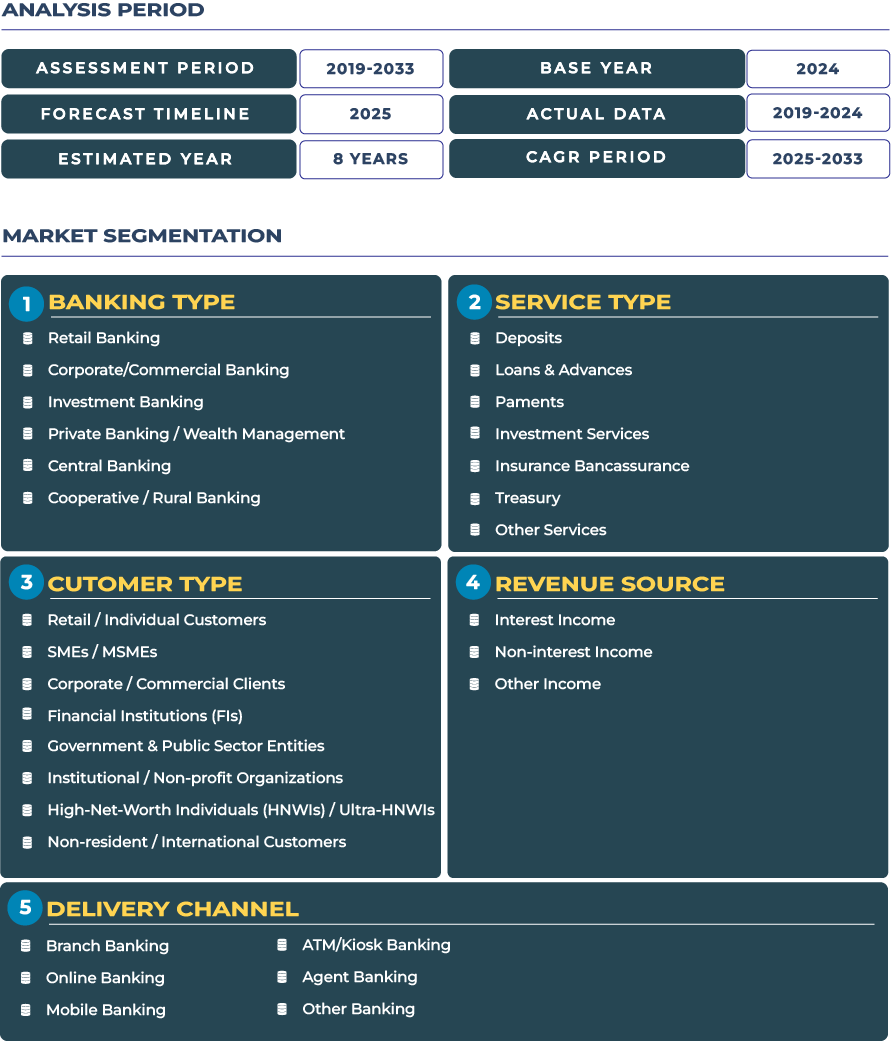
MEA Banking Market Segmentation
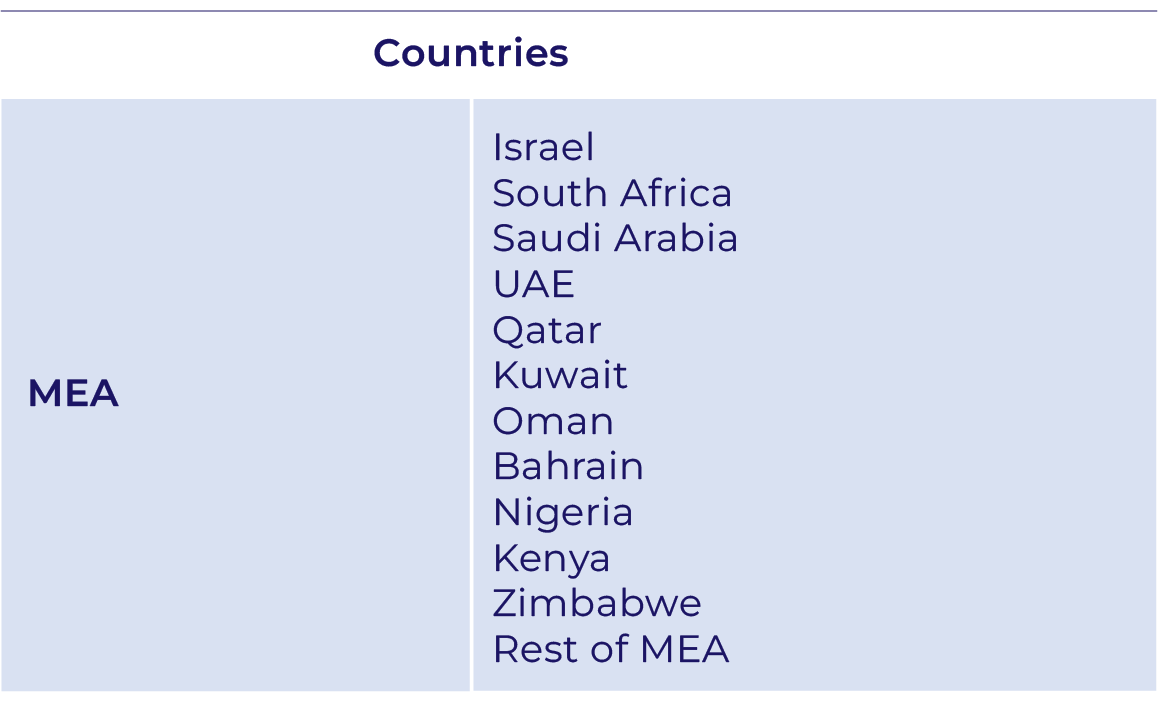
MEA Banking Market Countries Covered
Frequently Asked Questions
Banks are deploying AI-based credit scoring and mobile-first lending solutions to reach underserved populations. These platforms enable rapid credit assessment and disbursal, especially in rural and peri-urban areas, increasing SME lending and retail credit penetration.
Legacy system complexity, fragmented branch networks, and scarcity of skilled digital professionals are key challenges. Many banks face high modernization costs and regulatory compliance burdens, slowing the pace of transformation.
Robo-advisory platforms are enabling automated wealth management for mass affluent segments, offering lower-cost advisory services and personalized portfolios. This is expanding private banking reach across GCC and key African markets.
Related Reports

Turkey Fintech-enabled Robo-advisor Market Size | 2019-2033
- Report ID: BAF496 | Coverage: Country |
- Category: Banking and Finance | Sub-Category: FinTech |
- Published Date: Jan 2026 | US$495 |
Zimbabwe Banking Market Size | 2019-2033
- Report ID: BAF729 | Coverage: Country |
- Category: Banking and Finance | Sub-Category: Banking Services |
- Published Date: Oct 2025 | US$495 |
France Investment Banking Market Size | 2019-2033
- Report ID: BAF840 | Coverage: Country |
- Category: Banking and Finance | Sub-Category: Banking Services |
- Published Date: Oct 2025 | US$495 |
Brazil Rural Banking Market Size | 2019-2033
- Report ID: BAF946 | Coverage: Country |
- Category: Banking and Finance | Sub-Category: Banking Services |
- Published Date: Oct 2025 | US$495 |
Turkey Fintech-enabled Robo-advisor Market Size | 2019-2033
- Report ID: BAF496 | Coverage:Country |
- Category:Banking and Finance | Sub-Category: FinTech |
- Publishing Soon |US$495 |
Zimbabwe Banking Market Size | 2019-2033
- Report ID: BAF729 | Coverage:Country |
- Category:Banking and Finance | Sub-Category: Banking Services |
- Published Date: Oct 2025 |US$495 |
France Investment Banking Market Size | 2019-2033
- Report ID: BAF840 | Coverage:Country |
- Category:Banking and Finance | Sub-Category: Banking Services |
- Published Date: Oct 2025 |US$495 |
Brazil Rural Banking Market Size | 2019-2033
- Report ID: BAF946 | Coverage:Country |
- Category:Banking and Finance | Sub-Category: Banking Services |
- Published Date: Oct 2025 |US$495 |
Why Choose Us

24/5 Research Support
Get your queries resolved prior to and post purchasing research study

Customize As Per Specific Requirements
Get in-depth analysis based on your tailored research needs

Expertise in Tracking Niche Markets
Comprehensive view of latest technologies and opportunities across markets

360-Degree Analysis
Fact-based insights derived through supply & demand side analysis

Assured Quality
Deliver most accurate industry insights to maintain research quality

Information Security
Your confidential and personal data is secure and safe