
Saudi Arabia Cardiovascular Devices Market Size and Forecast by Device Type, Patient Demographics, End User, and Distribution Channel: 2019-2033
Sep 2025
| Format:

 |
Pages: 110+
|
Type: Sub-Industry Report
|
Authors:
Mahesh Y
(Assistant Research Manager)
|
Pages: 110+
|
Type: Sub-Industry Report
|
Authors:
Mahesh Y
(Assistant Research Manager)
MARKET OUTLOOK
Saudi Arabia Cardiovascular Devices Market Outlook: Vision 2030 Driving Cardiac Modernization and Premium Healthcare Transformation
The Saudi Arabia cardiovascular devices market is on a measured but steady growth path, supported by large-scale healthcare reforms and Vision 2030 initiatives. Valued at USD 165.0 million in 2025, the market is expected to reach USD 198.4 million by 2033, recording a CAGR of 2.3%. This trajectory reflects the modernization of tertiary hospitals, procurement of advanced surgical and monitoring systems, and integration of cardiac care in national transformation plans. Although challenges remain in terms of import reliance and competitive tenders, the cardiovascular devices sector continues to gain momentum as a strategic pillar of the Kingdom’s evolving healthcare ecosystem.
How Vision 2030 is Reshaping Saudi Arabia Cardiovascular Devices Market
Saudi Arabia is undergoing a profound transformation in healthcare, positioning itself as a regional leader in cardiovascular care under the framework of Vision 2030. The national strategy emphasizes modernization of hospitals, large-scale investments in tertiary care, and prioritization of cardiac disease management. This has accelerated demand for interventional cardiology systems, implantable cardiac devices, and premium diagnostic solutions across Riyadh, Jeddah, and Dammam. The government’s focus on strengthening healthcare infrastructure through public tenders, promoting localization of medical device manufacturing, and training local professionals is redefining the cardiovascular devices market in the Kingdom. The shift is not only about adopting high-value devices but also creating a sustainable ecosystem that blends international expertise with domestic capabilities. Political stability and continued fiscal support provide resilience to the cardiovascular devices industry, even amid global supply chain uncertainties and regional geopolitical complexities.
Drivers & Restraints: Structural Shifts Shaping the Cardiovascular Devices Landscape
Vision 2030 Investments and National Healthcare Modernization Accelerating Market Growth
The most significant driver of Saudi Arabia cardiovascular devices industry is the unprecedented allocation of resources toward healthcare modernization under Vision 2030. Billions of USD are being invested in building and upgrading tertiary hospitals, many of which are equipped with advanced catheterization labs and specialized cardiac surgery centers. Government-backed tenders for diagnostic imaging, consumables, and implantable cardiac devices create consistent demand for both global suppliers and local distributors. Furthermore, the government’s emphasis on medical tourism positions Saudi Arabia as a future destination for complex cardiac interventions, reinforcing the market’s role in regional healthcare competitiveness.
Import Reliance, Workforce Localization, and Tender Competitiveness Hindering Growth
Despite its promising trajectory, the cardiovascular devices market in Saudi Arabia faces structural constraints. Heavy reliance on imports for implantable devices, surgical instruments, and disposables exposes the industry to supply chain disruptions and currency fluctuations. Workforce localization requirements, while strategically important, present challenges in highly specialized fields such as interventional cardiology and cardiac surgery, where expertise remains largely expatriate-driven. Moreover, the government’s tendering system fosters intense competition among global and regional players, pressuring margins and sometimes limiting access for mid-sized companies. These barriers underline the importance of balancing premium healthcare ambitions with localized training, innovation, and sustainable procurement models.
Trends & Opportunities: Strategic Pathways Transforming the Saudi Cardiovascular Devices Industry
National Hospital Modernization and Expansion of Specialized Cardiac Centers
Saudi Arabia is witnessing a wave of tertiary hospital projects across Riyadh, Jeddah, and the Eastern Province, many of which prioritize advanced cardiac care units. Specialized cardiac centers, equipped with robotic-assisted surgical systems and digital monitoring platforms, are becoming central to the healthcare transformation agenda. The expansion of such facilities reflects the Kingdom’s intent to tackle cardiovascular disease as a national priority, creating sustained demand for surgical devices, monitoring solutions, and high-value implantable devices.
Government Procurement Engagement and Localization Incentives Offering Market Opportunities
Opportunities in the Saudi cardiovascular devices ecosystem are increasingly tied to government procurement contracts and localization initiatives. The Ministry of Investment and the Ministry of Health are actively encouraging partnerships that localize assembly, enhance supply chain resilience, and establish training programs for Saudi clinicians. International companies that align with these national objectives stand to benefit from long-term contracts and deeper integration into the Saudi healthcare ecosystem. Additionally, the expansion of digital health platforms opens new avenues for telemonitoring solutions, enabling preventive cardiac care and reducing hospital burden. These opportunities highlight the dual emphasis on modernization and sustainability within the Saudi cardiovascular devices market.
Competitive Landscape: Localization, Strategic Alliances, and Premium Device Adoption
The competitive landscape of the Saudi Arabia cardiovascular devices market is defined by global leaders such as Medtronic, Abbott, Boston Scientific, and Philips, alongside regional distributors that facilitate procurement contracts. A central strategy involves aligning with government priorities, including localization of assembly lines, capacity-building programs for Saudi clinicians, and partnerships with public hospitals. Recent developments include national tenders for advanced cardiac monitoring systems in 2024 and hospital modernization initiatives that prioritized interventional and surgical devices across Riyadh and Jeddah. Companies that complement premium device offerings with after-sales service, training, and maintenance are well-positioned to win contracts in this highly competitive and government-driven cardiovascular devices market.
*Research Methodology: This report is based on DataCube’s proprietary 3-stage forecasting model, combining primary research, secondary data triangulation, and expert validation.
[Learn more]
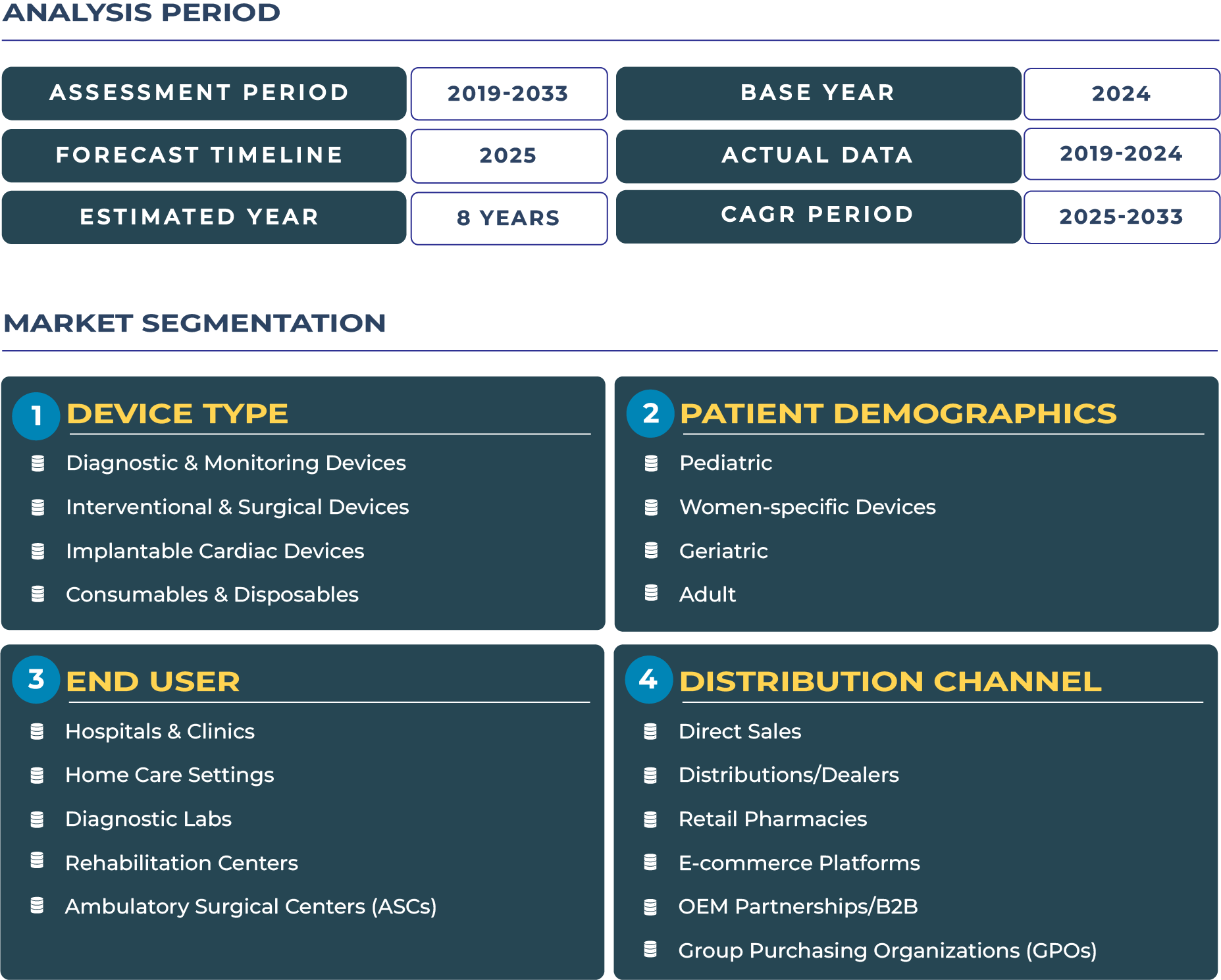
Saudi Arabia Cardiovascular Devices Market Segmentation
Frequently Asked Questions
The market is shaped by Vision 2030 priorities including hospital modernization, localization of medical technologies, and expansion of specialized cardiac centers to address growing disease prevalence.
Companies should pursue competitive tenders with value-based proposals, integrate training and service models, and align with government initiatives on localization and healthcare sustainability.
The Saudi market is highly prepared, with large-scale infrastructure investments, growing demand for advanced interventional devices, and strong government support ensuring steady market adoption through 2033.
Related Reports

Japan AI Robotics Market Size | 2019-2033
- Report ID: IT283 | Coverage: Country |
- Category: Information Technology | Sub-Category: Artificial Intelligence |
- Published Date: Dec 2025 | US$495 |
Colombia Public Cloud Market Size | 2019-2033
- Report ID: IT1793 | Coverage: Country |
- Category: Information Technology | Sub-Category: IT Software & Services |
- Published Date: Jul 2025 | US$495 |
Chile Public Cloud Market Size | 2019-2033
- Report ID: IT1794 | Coverage: Country |
- Category: Information Technology | Sub-Category: IT Software & Services |
- Published Date: Jul 2025 | US$495 |
Spain SaaS Market Size | 2019-2034
- Report ID: IT1831 | Coverage: Country |
- Category: Information Technology | Sub-Category: Cloud Computing Technology |
- Published Date: Dec 2025 | US$495 |
Latin America SaaS Market Size | 2019-2034
- Report ID: IT1857 | Coverage: Regional |
- Category: Information Technology | Sub-Category: Cloud Computing Technology |
- Published Date: Dec 2025 | US$1,345 |
Japan AI Robotics Market Size | 2019-2033
- Report ID: IT283 | Coverage:Country |
- Category:Information Technology | Sub-Category: Artificial Intelligence |
- Publishing Soon |US$495 |
Colombia Public Cloud Market Size | 2019-2033
- Report ID: IT1793 | Coverage:Country |
- Category:Information Technology | Sub-Category: IT Software & Services |
- Published Date: Jul 2025 |US$495 |
Chile Public Cloud Market Size | 2019-2033
- Report ID: IT1794 | Coverage:Country |
- Category:Information Technology | Sub-Category: IT Software & Services |
- Published Date: Jul 2025 |US$495 |
Spain SaaS Market Size | 2019-2034
- Report ID: IT1831 | Coverage:Country |
- Category:Information Technology | Sub-Category: Cloud Computing Technology |
- Published Date: Dec 2025 |US$495 |
Latin America SaaS Market Size | 2019-2034
- Report ID: IT1857 | Coverage:Regional |
- Category:Information Technology | Sub-Category: Cloud Computing Technology |
- Published Date: Dec 2025 |US$1,345 |
Why Choose Us

24/5 Research Support
Get your queries resolved prior to and post purchasing research study

Customize As Per Specific Requirements
Get in-depth analysis based on your tailored research needs

Expertise in Tracking Niche Markets
Comprehensive view of latest technologies and opportunities across markets

360-Degree Analysis
Fact-based insights derived through supply & demand side analysis

Assured Quality
Deliver most accurate industry insights to maintain research quality

Information Security
Your confidential and personal data is secure and safe