
Thailand Fintech Market Size and Forecast by Fintech Services, Technology, Revenue Model, and End User: 2019-2033
Sep 2025
| Format:

 |
Pages: 110+
|
Type: Industry Report
|
Authors:
Jayson Gomes
(Manager – BFSI)
|
Pages: 110+
|
Type: Industry Report
|
Authors:
Jayson Gomes
(Manager – BFSI)
MARKET OUTLOOK
Thailand Fintech Market Outlook: Tourism-Centric Fintech: QR Payments and FX Wallet Innovation Reshaping Thailand’s Digital Finance Landscape
Thailand fintech market is rapidly emerging as one of the most tourism-driven digital economies in Asia. With more than 39 million international visitors annually before the pandemic and a steady rebound in tourism in 2024, Thailand’s fintech ecosystem has evolved around QR-based payments, FX-linked wallets, and tourist-centric merchant solutions. The ubiquity of QR interoperability in cities like Bangkok, Chiang Mai, and Phuket has made multi-currency wallet adoption seamless for both international travelers and local merchants. This unique alignment between tourism flows and financial innovation has positioned Thailand as a model in Asia for cross-border digital payments.
In 2025, the Thailand Fintech Market is estimated at USD 1.8 billion, projected to reach USD 5.4 billion by 2033, expanding at a CAGR of 14.6%. This remarkable growth is supported by robust regulatory frameworks, consumer readiness for digital payments, and the national push for cashless transactions. Factors such as strong QR-code adoption, increasing smartphone penetration, and government-backed initiatives like the Bank of Thailand’s push for digital payment standards are further accelerating market expansion. The long-term outlook is defined by growing merchant acceptance, integration of FX wallets for tourists, and wider adoption of InsurTech in travel-related services.
Tourism-Driven Digital Payments Fueling Market Expansion
The strongest driver of fintech adoption in Thailand is its reliance on tourism. The country’s status as a global hub for leisure and medical tourism has fueled demand for multi-currency digital wallets, instant FX conversion services, and interoperable QR-code payments. Merchants ranging from luxury hotels in Bangkok to small handicraft sellers in Chiang Mai are increasingly leveraging fintech platforms to accept instant digital transactions from visitors, reducing reliance on cash and enabling better transparency.
Thailand leading banks and payment providers have aligned with national initiatives such as PromptPay, which connects citizens and tourists to a unified QR-payment infrastructure. This has not only improved convenience but has also attracted collaborations with regional platforms in Singapore, Malaysia, and Japan, making Thailand a pioneer of cross-border QR interoperability. These innovations create an inclusive digital ecosystem where tourists and SMEs benefit from reduced transaction costs and faster settlements.
Challenges of Political Instability and Persistent Cash Usage
Despite impressive growth, the fintech sector in Thailand faces structural challenges. Political instability has historically impacted investor confidence and regulatory timelines, creating uncertainties in long-term digital finance planning. Moreover, although digital wallets are widely accepted in urban hubs, rural provinces continue to rely heavily on cash-based transactions. This dual economy presents challenges for achieving nationwide cashless transformation.
The Office of the National Economic and Social Development Council highlights that approximately 40% of Thailand population remains underbanked or unbanked, restricting access to full-scale fintech services. These gaps limit the scalability of advanced solutions like WealthTech or InsurTech, which depend on higher financial literacy and banking penetration. Bridging these divides will be critical for sustained nationwide adoption.
Tourism Payment Innovations and Cross-Border Opportunities Driving Trends
Thailand is witnessing strong momentum in tourism payment innovations, where digital-first solutions are catering directly to international visitors. Key trends include multi-currency wallets enabling automatic FX conversion, interoperable QR codes that can be scanned across multiple countries, and blockchain pilots for cross-border remittances.
Opportunities extend beyond tourism, particularly in SME e-commerce payments. Small and medium-sized enterprises in Thailand are expanding into digital marketplaces, requiring tailored fintech solutions such as low-fee digital loans, integrated payment gateways, and invoice financing. This presents a long-term growth opportunity for fintech players aiming to capture both consumer and enterprise segments in the market.
Government Initiatives Accelerating Digital Transformation
The Bank of Thailand and the Stock Exchange of Thailand have been instrumental in shaping the fintech regulatory framework. Initiatives such as standardized QR payments under PromptPay, sandbox environments for fintech innovation, and cross-border payment agreements have laid the foundation for a secure and scalable ecosystem.
Additionally, Thailand participation in the ASEAN payment connectivity framework strengthens its position in cross-border digital transactions. With strong oversight and regulatory clarity, the fintech market is gaining momentum among domestic investors and foreign entrants alike.
Key Market Influences: Tourism Payments and Merchant Adoption
Two major factors stand out in shaping the Thailand fintech ecosystem: the scale of tourist-driven payment transactions and merchant QR-code adoption. With tourism contributing over 18% of GDP in 2024, the ability of merchants to seamlessly accept digital payments from foreign visitors is a direct growth enabler. Simultaneously, SMEs adopting QR-based systems not only improve transaction speed but also formalize their business operations, creating long-term economic benefits. These factors are projected to sustain Thailand fintech expansion across the next decade.
Competitive Landscape: Tourism-Centric Innovation and Crypto-to-Baht Pilots
The competitive dynamics of Thailand fintech sector are defined by a mix of domestic leaders and international entrants. Local players such as Kasikornbank have launched multi-currency wallets and integrated QR-based platforms targeting tourists. International platforms are also entering the ecosystem, focusing on partnerships with hotels, airlines, and e-commerce platforms to capture tourist payments.
A significant development occurred in August 18, 2025, when Thailand launched a crypto-to-baht conversion pilot for foreign tourists. This initiative aims to enable tourists to pay merchants directly in local currency using digital assets, boosting inclusivity and expanding Thailand position as a digital finance hub. Additionally, fintech providers are aligning product strategies with monetary policy rates to ensure competitive loan offerings and consumer affordability, highlighting the interconnectedness between macroeconomics and fintech pricing models.
Conclusion: Building a Globally Connected, Tourism-Driven Fintech Ecosystem in Thailand
The Thailand fintech market is strategically positioned at the intersection of tourism, technology, and financial innovation. Its success lies in embedding QR interoperability and FX-linked wallets into everyday transactions, thereby enhancing both tourist experiences and merchant capabilities. The country’s fintech industry also benefits from a robust regulatory ecosystem and strong merchant adoption, which together foster long-term stability.
Challenges such as political instability and persistent cash dependency remain, yet the overall direction is clear—Thailand is committed to building a globally connected digital finance landscape. By aligning cross-border payment systems with ASEAN partners, piloting crypto-to-baht solutions, and expanding digital offerings for SMEs, Thailand is setting benchmarks in the regional fintech sector. Over the coming decade, its fintech ecosystem is expected to play a vital role in driving inclusive growth, boosting tourism competitiveness, and strengthening its global financial standing.
*Research Methodology: This report is based on DataCube’s proprietary 3-stage forecasting model, combining primary research, secondary data triangulation, and expert validation.
[Learn more]
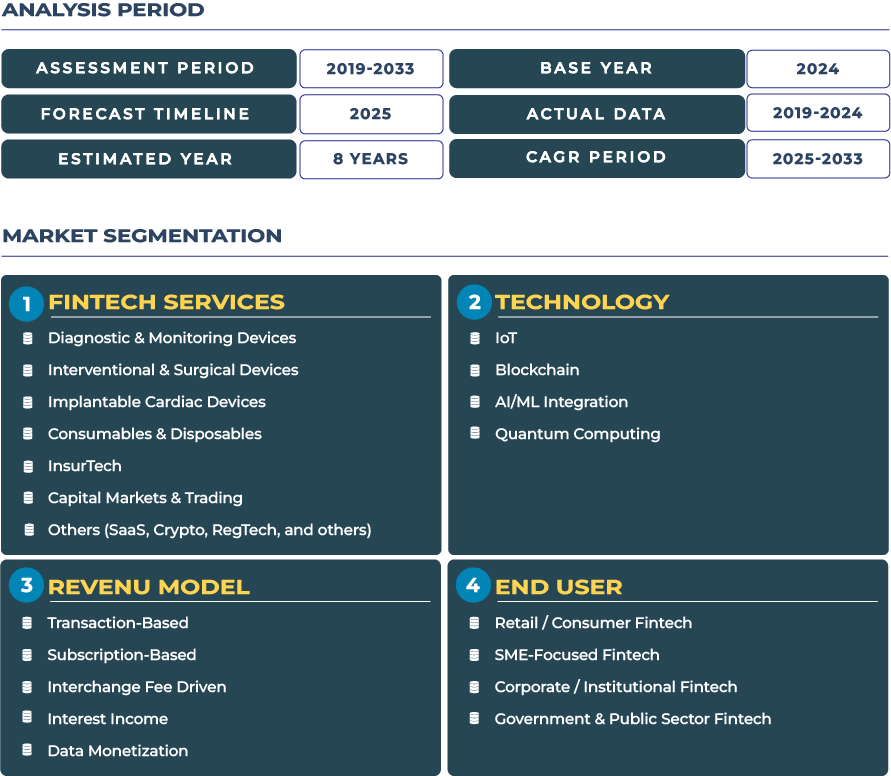
Thailand Fintech Market Segmentation
Frequently Asked Questions
Tourism-driven payment innovation allows insurers to integrate instant policy issuance and claims settlement through QR payments, making travel insurance seamless for visitors.
QR-based ecosystems simplify premium collection by offering real-time digital transactions across urban and rural regions, improving efficiency for insurers and policyholders.
Insurers are adjusting premium structures in line with interest rate changes from the Bank of Thailand, ensuring competitive yet sustainable pricing models.
Related Reports

Nordics Generative AI ASICs Market Size | 2019-2033
- Report ID: SEM246 | Coverage: Country |
- Category: Semiconductors | Sub-Category: AI Chips |
- Published Date: Dec 2025 | US$495 |
Oman Medical Device Market Size | 2019-2033
- Report ID: HEA22 | Coverage: Country |
- Category: Healthcare | Sub-Category: Medical Devices |
- Published Date: Feb 2026 | US$495 |
Brazil Media Market Size | 2019-2033
- Report ID: MAE35 | Coverage: Country |
- Category: Media and Entertainment | Sub-Category: Media |
- Published Date: May 2025 | US$495 |
South Korea Rural Banking Market Size | 2019-2033
- Report ID: BAF934 | Coverage: Country |
- Category: Banking and Finance | Sub-Category: Banking Services |
- Published Date: Oct 2025 | US$495 |
Nordics Generative AI ASICs Market Size | 2019-2033
- Report ID: SEM246 | Coverage:Country |
- Category:Semiconductors | Sub-Category: AI Chips |
- Publishing Soon |US$495 |
Oman Medical Device Market Size | 2019-2033
- Report ID: HEA22 | Coverage:Country |
- Category:Healthcare | Sub-Category: Medical Devices |
- Published Date: Feb 2026 |US$495 |
Brazil Media Market Size | 2019-2033
- Report ID: MAE35 | Coverage:Country |
- Category:Media and Entertainment | Sub-Category: Media |
- Published Date: May 2025 |US$495 |
South Korea Rural Banking Market Size | 2019-2033
- Report ID: BAF934 | Coverage:Country |
- Category:Banking and Finance | Sub-Category: Banking Services |
- Published Date: Oct 2025 |US$495 |
Why Choose Us

24/5 Research Support
Get your queries resolved prior to and post purchasing research study

Customize As Per Specific Requirements
Get in-depth analysis based on your tailored research needs

Expertise in Tracking Niche Markets
Comprehensive view of latest technologies and opportunities across markets

360-Degree Analysis
Fact-based insights derived through supply & demand side analysis

Assured Quality
Deliver most accurate industry insights to maintain research quality

Information Security
Your confidential and personal data is secure and safe