
UK Diagnostic Imaging Devices Market Size and Forecast by Modality, Application, Technology, End User, and Portability: 2019-2033
Oct 2025
| Format:

 |
Pages: 110+
|
Type: Sub-Industry Report
|
Authors:
Mahesh Y
(Assistant Research Manager)
|
Pages: 110+
|
Type: Sub-Industry Report
|
Authors:
Mahesh Y
(Assistant Research Manager)
MARKET OUTLOOK
UK Diagnostic Imaging Devices Market Outlook – A Strategic Overview Amidst NHS Modernisation
The UK diagnostic imaging devices ecosystem is experiencing a fundamental transformation as the NHS England embarks on an ambitious national diagnostic overhaul through digital health reforms and modernisation of imaging infrastructure. As ageing diagnostic fleets and rising demand for advanced modalities challenge legacy systems, capital investment in high-throughput equipment aligned with networked service models is taking centre stage. In this context, the UK diagnostic imaging devices market is projected to grow from approximately USD 1.4 billion in 2025 to USD 1.9 billion by 2033, reflecting a CAGR of about 3.9%. This outlook underscores increasing activity in major device sub-segments including CT, MRI, ultrasound and X-ray systems, while the broader diagnostics-heavy environment places advanced imaging at the heart of early-detection strategies.
Enabling the Market – NHS Diagnostic Modernisation as a Catalyst
The driver behind this market shift is the NHS’s 10-Year Health Plan and the imaging networks initiative, which aims to shift services from hospital-based to community-based settings, digitise workflows and deliver earlier diagnosis. The imaging networks strategy highlights the establishment of regional imaging partnerships to share digital images, improve equipment utilisation and drive efficiency. Through these reforms, demand for modern imaging hardware, especially modalities capable of delivering high throughput in community diagnostic centres and ambulatory settings, is accelerating. The result: device vendors are noticing demand for next-gen CT, MRI and ultrasound platforms, as well as mobile and portable X-ray units, that integrate seamlessly into networked workflows and support image-sharing across sites.
Charting Growth Through Infrastructure and Innovation
The market outlook for the UK diagnostic imaging devices sector is shaped by multiple intersecting forces: a national modernisation push, evolving care pathways, and technological advancement across imaging modalities. The projected CAGR signals steady but measured growth. Much of this growth will be anchored in the replacement of ageing fleets and the deployment of mid- to high-end imaging systems in both acute and community settings. The demand environment is being fueled by rising incidence of chronic diseases (such as cardiovascular conditions and cancer), the shift to earlier diagnosis and expanding ambulatory/diagnostic hub infrastructure. At the same time, resource constraints within the NHS workforce, combined with supply-chain ripples (heightened by post-Brexit logistics and global semiconductor shortages), will temper adoption speed and introduce moderation into growth rates. Nevertheless, the strategic alignment of imaging vendors with NHS framework contracts and community diagnostic centre roll-outs will underpin sustained investment cycles through to 2033.
Growth Drivers & Market Constraints – What’s Fueling the Momentum and What’s Holding It Back
Growth Drivers – Infrastructure Refresh and Private Imaging Expansion
Major growth impetus arises from large-scale equipment refresh programmes supported by NHS capital allocations, as well as the expansion of the private imaging sector and ambulatory diagnostic centres. Public-sector policy has prioritised early diagnosis and the scaling of community diagnostic hubs. For instance, the imaging networks guidance mandates shared imaging across sites to enhance capacity and efficiency. Meanwhile, private players are investing to meet unmet demand, offering mobile and satellite imaging services, which stimulates demand for portable and mid-tier devices. In addition, innovations in imaging technology (such as advanced CT, wider-angle tomosynthesis in mammography and helium-independent MRI) are prompting upgrades of installed base in the UK, further supporting market growth.
Market Constraints – Procurement Delays, Workforce and Supply-Chain Frictions
On the flip side, the market encounters several inhibitors. Lengthy procurement approval processes within the NHS, including health technology assessments and value-framework evaluations, delay acquisitions of new imaging platforms. Workforce shortages in radiography and reporting continue to limit throughput, reducing the incentive for some trusts to accelerate hardware purchases. Moreover, post-Brexit supply-chain frictions (import delays, regulatory registration changes) and global component shortages (notably for CT/MRI systems) have extended lead times and increased costs. These factors collectively moderate market responsiveness, dampening the pace of upgrades and restraining the full potential of the available addressable market.
Emerging Trends & Strategic Opportunities – Where the Market Is Heading
Trends Shaping the Landscape – Networks, Mobility and Modal-Integration
The UK diagnostic imaging devices sector is being reshaped by the expansion of community diagnostic centres (CDCs) and integrated diagnostic hubs. For example, the NHS community diagnostic centres programme now counts over 165 operational sites across England, many located in accessible community settings such as shopping centres or educational campuses. These centres demand imaging devices optimised for high-volume throughput, streamlined workflow and staff flexibility. At the same time, demand for mobile imaging units and “diagnostic as-a-service” models are rising, enabling trusts to respond to capacity bottlenecks without large-scale capital expenditure. Another trend is the shift to multimodal systems and AI-enabled workflows, reinforcing the need for next-generation hardware capable of integration into digital imaging ecosystems.
Opportunities for Vendors and Providers – Framework Access, Community Models and Service Contracts
For imaging device manufacturers and service providers, the UK presents a compelling opportunity window. Engagement with NHS long-term framework contracts (which aggregate procurement across trusts) offers sustained access to high-volume equipment replacement cycles. Further, aligning product offerings to the community diagnostics model, mobile CT/ MRI units, modular ultrasound suites, bundled service agreements, can unlock growth beyond traditional hospital footprints. Vendors that develop flexible business models (“imaging-devices-as-a-service”), integrate uptime monitoring, remote servicing and scalable deployment across ICS (Integrated Care System) geographies will be well-positioned. Moreover, addressing sustainability imperatives (e.g., energy-efficient MRI systems, reduced helium usage) also presents differentiation potential, particularly as UK healthcare moves toward net-zero emission targets.
Competitive Landscape & Strategic Moves in the UK Diagnostic Imaging Devices Sector
The competitive environment in the UK diagnostic imaging devices market includes global tier-one players collaborating or competing for NHS framework contracts, service partnerships and upgrade programmes. For example, Siemens Healthineers announced in July 2025 that the University Hospital Southampton NHS Foundation Trust became the first UK site to install its MAMMOMAT B.brilliant 3D mammography platform, a delivery that underlines strategic alignment with breast-screening upgrade agendas. Such high-visibility installations enhance vendor credibility and support procurement discussions across the NHS. Other competitors are securing value-based partnerships with imaging centres, deploying fleets of mobile scanners under long-term service contracts, and leveraging AI-enabled device features to differentiate in tender evaluations. The key strategic levers for market players include engaging early in NHS capital refresh cycles, offering devices compliant with networked workflows and demonstrating integration capabilities with digital imaging platforms and mobile deployment models.
*Research Methodology: This report is based on DataCube’s proprietary 3-stage forecasting model, combining primary research, secondary data triangulation, and expert validation.
[Learn more]
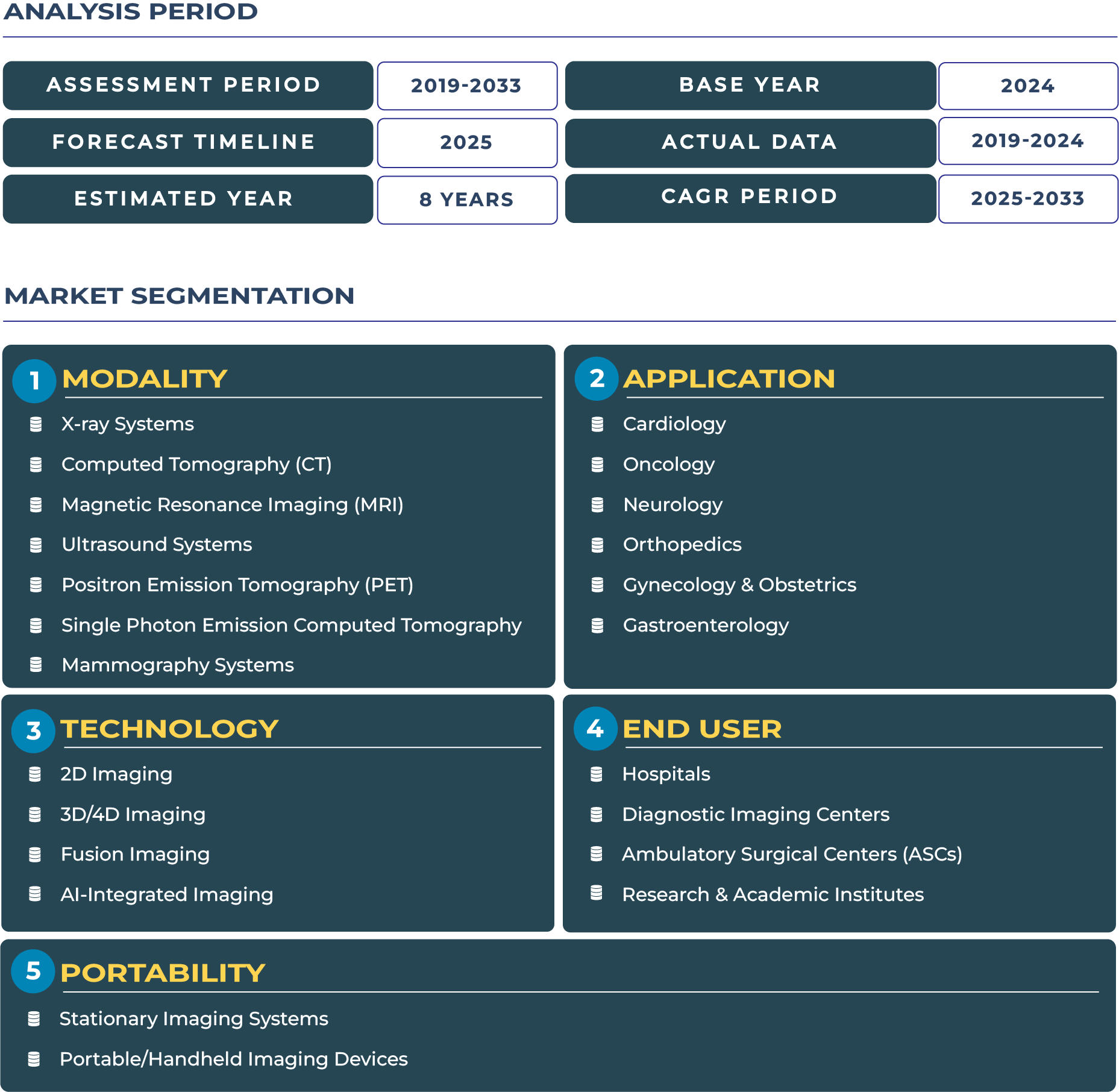
UK Diagnostic Imaging Devices Market Segmentation
Frequently Asked Questions
NHS modernization is accelerating adoption of advanced imaging systems by funding networked diagnostic hubs and infrastructure upgrades, expanding community-based access, and standardising procurement for faster technology adoption.
AI imaging vendors can integrate their platforms within NHS imaging networks, support triage automation, enable efficient reporting, and partner under NHS frameworks to provide AI-enabled imaging devices and decision support tools.
The UK upholds strong data governance through NHS Digital and UK GDPR frameworks, ensuring imaging data interoperability while safeguarding patient privacy via secure, standardised data-exchange architectures.
Related Reports

Qatar SaaS Market Size | 2019-2034
- Report ID: IT1867 | Coverage: Country |
- Category: Information Technology | Sub-Category: Cloud Computing Technology |
- Published Date: Dec 2025 | US$495 |
Indonesia Investment Banking Market Size | 2019-2033
- Report ID: BAF859 | Coverage: Country |
- Category: Banking and Finance | Sub-Category: Banking Services |
- Published Date: Oct 2025 | US$495 |
Brazil Private Banking Market Size | 2019-2033
- Report ID: BAF959 | Coverage: Country |
- Category: Banking and Finance | Sub-Category: Banking Services |
- Published Date: Oct 2025 | US$495 |
Vietnam Diagnostic Imaging Devices Market Size | 2019-2033
- Report ID: HEA345 | Coverage: Country |
- Category: Healthcare | Sub-Category: Medical Devices |
- Published Date: Nov 2025 | US$495 |
GCC AI Computer Vision Market Size | 2019-2033
- Report ID: IT1972 | Coverage: Regional |
- Category: Information Technology | Sub-Category: Artificial Intelligence |
- Published Date: Nov 2025 | US$1,345 |
GCC Diagnostic and Monitoring Devices Market Size | 2019-2033
- Report ID: HEA413 | Coverage: Regional |
- Category: Healthcare | Sub-Category: Medical Devices |
- Published Date: Dec 2025 | US$1,345 |
Qatar SaaS Market Size | 2019-2034
- Report ID: IT1867 | Coverage:Country |
- Category:Information Technology | Sub-Category: Cloud Computing Technology |
- Published Date: Dec 2025 |US$495 |
Indonesia Investment Banking Market Size | 2019-2033
- Report ID: BAF859 | Coverage:Country |
- Category:Banking and Finance | Sub-Category: Banking Services |
- Published Date: Oct 2025 |US$495 |
Brazil Private Banking Market Size | 2019-2033
- Report ID: BAF959 | Coverage:Country |
- Category:Banking and Finance | Sub-Category: Banking Services |
- Published Date: Oct 2025 |US$495 |
Vietnam Diagnostic Imaging Devices Market Size | 2019-2033
- Report ID: HEA345 | Coverage:Country |
- Category:Healthcare | Sub-Category: Medical Devices |
- Published Date: Nov 2025 |US$495 |
GCC AI Computer Vision Market Size | 2019-2033
- Report ID: IT1972 | Coverage:Regional |
- Category:Information Technology | Sub-Category: Artificial Intelligence |
- Publishing Soon |US$1,345 |
GCC Diagnostic and Monitoring Devices Market Size | 2019-2033
- Report ID: HEA413 | Coverage:Regional |
- Category:Healthcare | Sub-Category: Medical Devices |
- Publishing Soon |US$1,345 |
Why Choose Us

24/5 Research Support
Get your queries resolved prior to and post purchasing research study

Customize As Per Specific Requirements
Get in-depth analysis based on your tailored research needs

Expertise in Tracking Niche Markets
Comprehensive view of latest technologies and opportunities across markets

360-Degree Analysis
Fact-based insights derived through supply & demand side analysis

Assured Quality
Deliver most accurate industry insights to maintain research quality

Information Security
Your confidential and personal data is secure and safe