
Canada Diagnostic Imaging Devices Market Size and Forecast by Modality, Application, Technology, End User, and Portability: 2019-2033
Oct 2025
| Format:

 |
Pages: 110+
|
Type: Sub-Industry Report
|
Authors:
Mahesh Y
(Assistant Research Manager)
|
Pages: 110+
|
Type: Sub-Industry Report
|
Authors:
Mahesh Y
(Assistant Research Manager)
MARKET OUTLOOK
Building a Sustainable and Accessible Imaging Future: Canada Diagnostic Imaging Devices Market Transforms Through Equity and Innovation
Canada diagnostic imaging devices market is entering a defining phase where sustainability and accessibility are reshaping both investment priorities and care delivery models. The country’s publicly funded healthcare ecosystem is emphasizing equitable access to advanced diagnostic imaging systems, from X-ray and ultrasound to MRI and PET, across its urban and remote communities. The market, valued at USD 1.3 billion in 2025, is projected to reach USD 1.9 billion by 2033, reflecting a steady CAGR of 5.2%. This growth underscores the country’s dual commitment to environmentally conscious infrastructure and inclusive healthcare access. Supported by federal and provincial collaboration, Canada’s diagnostic imaging ecosystem is transitioning toward energy-efficient modalities, modular installations, and digital integration to reduce operational carbon footprints while expanding reach in rural provinces.
Canada Diagnostic Imaging Devices Market Outlook: Integrating Eco-Efficiency with Diagnostic Access in Canadian Healthcare
The Canadian healthcare system has long been guided by a universal coverage model, and this ethos now extends into the diagnostic imaging devices industry. Hospitals and health authorities across provinces are prioritizing sustainability metrics within their equipment procurement frameworks. The Health Canada and Public Health Agency of Canada continue to play central roles in advancing quality standards and equitable technology access. New installations of energy-efficient CT scanners and digital radiography systems are minimizing power consumption and improving scan throughput. Additionally, climate-conscious design standards embedded into medical infrastructure projects are fostering an ecosystem where performance aligns with environmental stewardship.
From an accessibility standpoint, national and provincial programs are investing in mobile and tele-imaging units to serve regions such as Northern Ontario, Yukon, and Nunavut. These initiatives, coupled with teleradiology partnerships, are bridging geographic disparities in diagnostic capacity. The convergence of sustainability, equity, and technology integration positions Canada as a leading example of socially responsible healthcare modernization.
Drivers & Restraints: Federal Collaboration and Fiscal Realities Defining Market Momentum
Public Procurement and Remote Care Needs Accelerating Imaging Adoption
The most influential driver of the Canada diagnostic imaging devices market is the momentum created by publicly funded procurement programs. Federal and provincial collaborations are enabling bulk acquisitions of high-value imaging equipment, ensuring standardized access across multiple hospital networks. Provinces such as British Columbia and Ontario have led joint tenders for CT and MRI installations, optimizing supplier negotiations and accelerating equipment upgrades.
Simultaneously, the rise in telehealth and remote diagnostics has elevated the importance of mobile imaging and remote servicing solutions for geographically dispersed populations. The surge in demand for portable ultrasound and low-dose CT systems is closely tied to Canada’s vast geography and the logistical challenges of healthcare delivery to remote regions. These dynamics are supported by the growing inclusion of sustainability evaluation criteria within procurement contracts, aligning healthcare expansion with environmental responsibility.
Procurement Delays and Budgetary Constraints Slowing Down Equipment Modernization
Despite strong government support, the market’s pace of modernization is constrained by structural challenges. Multi-stakeholder procurement processes often lead to extended lead times before approvals and installations can proceed. Each provincial health authority manages its own budget allocations, making fiscal flexibility limited during capital-intensive periods. Economic pressures following global supply chain disruptions have further complicated delivery timelines and pricing stability for imported modalities such as MRI and PET systems.
These delays can slow technology refresh cycles, especially for smaller or rural hospitals. However, the ongoing shift toward operational expenditure (Opex)-based models, like managed equipment services and leasing, is helping overcome some of these barriers. Vendors adapting to the Canadian fiscal environment with modular financing options are gaining a competitive edge in winning long-term supply and maintenance contracts.
Trends & Opportunities: Centralized Procurement and Teleradiology Reshaping National Diagnostic Access
Centralized Purchasing and Provincial Health Authority Integration Streamlining Imaging Deployments
An important trend transforming the Canadian diagnostic imaging devices ecosystem is the consolidation of procurement power within provincial health authorities. Provinces such as Alberta and Quebec have adopted centralized tendering processes that negotiate with OEMs on behalf of multiple hospital networks. This approach standardizes technology specifications, simplifies vendor management, and enhances interoperability across institutions. The move toward a unified data and imaging ecosystem supports improved workflow integration and data-driven healthcare planning.
Meanwhile, the integration of teleradiology and cloud-enabled image sharing platforms is improving diagnostic capacity across remote regions. Radiologists based in urban centers are now able to interpret scans in real time for patients located thousands of miles away, significantly reducing turnaround times and referral bottlenecks. The result is a more efficient, resilient, and inclusive imaging network that reflects both the technological and social priorities of modern Canada.
New Business Models and Digital Service Offerings Creating Growth Prospects
As provincial budgets face ongoing scrutiny, there is a clear opportunity for companies to design Opex-aligned business models that cater to Canada’s public healthcare environment. Modular financing, leasing, and managed-service offerings allow hospitals to spread costs across fiscal cycles while maintaining access to the latest technologies. Vendors are also rolling out remote maintenance packages that rely on teleradiology and predictive diagnostics to minimize downtime.
These strategies address the twin goals of fiscal responsibility and service continuity. Furthermore, they align with Canada’s broader sustainability agenda by extending device lifecycles and reducing waste. As the country continues its digital health transition, partnerships between hospitals, technology providers, and academic institutions will define the next decade of diagnostic imaging development.
Competitive Landscape: Collaborative Investments and Sustainable Imaging Innovations Leading the Market
The competitive dynamics of the Canada diagnostic imaging devices sector are being redefined by public-private collaborations and innovation in eco-efficient technologies. Leading manufacturers such as Siemens Healthineers Canada and Philips Canada continue to play instrumental roles in modernizing provincial imaging infrastructure. Their strategies increasingly emphasize sustainability, remote diagnostics, and digital connectivity. The adoption of leasing and managed-service models has become a practical solution for hospitals seeking cost-effective modernization without exceeding fiscal constraints. Through these approaches, Canada diagnostic imaging ecosystem is not only expanding but doing so with an environmentally conscious and financially sustainable blueprint.
*Research Methodology: This report is based on DataCube’s proprietary 3-stage forecasting model, combining primary research, secondary data triangulation, and expert validation.
[Learn more]
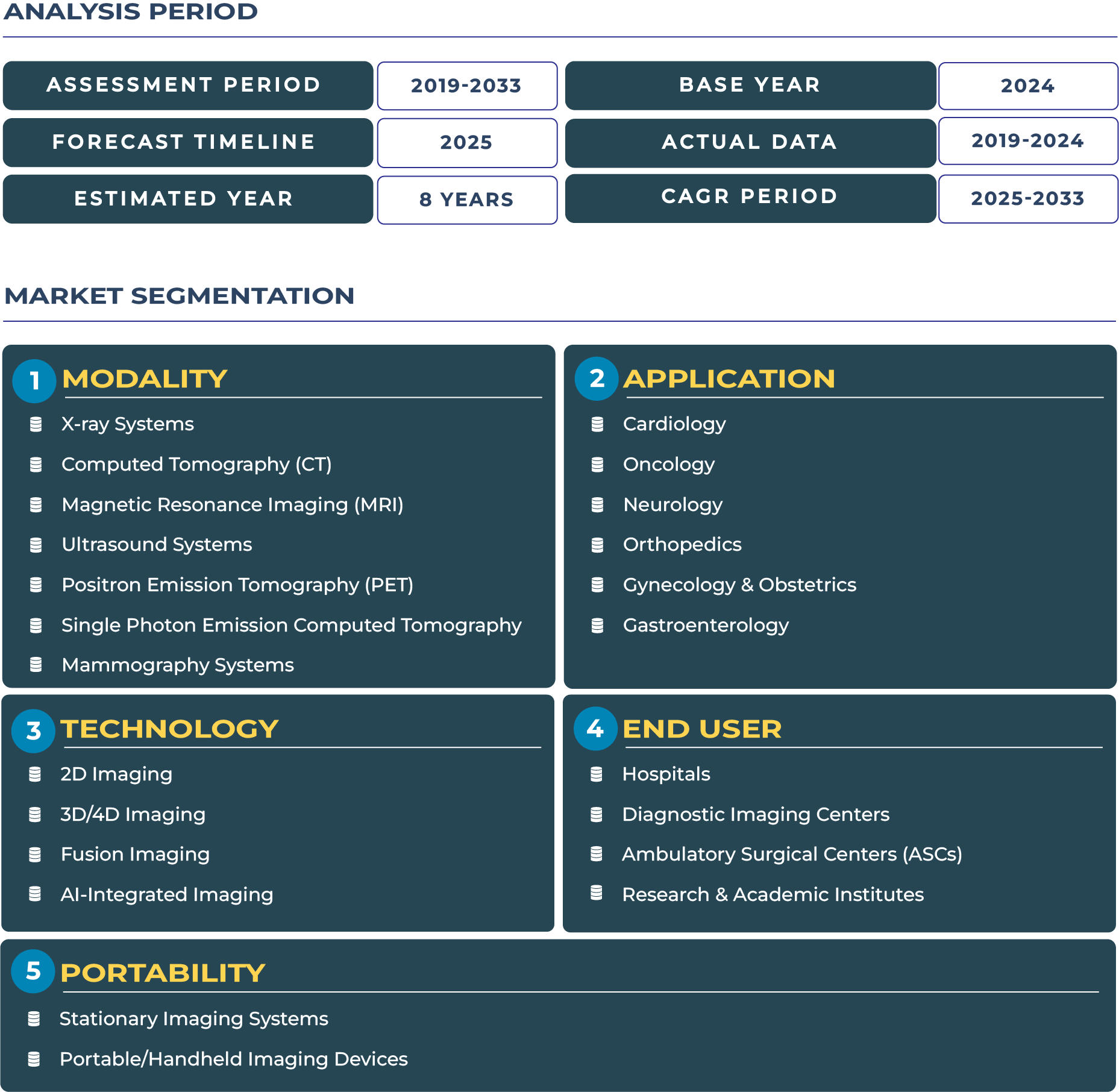
Canada Diagnostic Imaging Devices Market Segmentation
Frequently Asked Questions
Canada diagnostic devices imaging market integrates eco-design and energy-efficient systems, ensuring lower emissions and reduced operating costs while advancing national green healthcare goals.
Federal and provincial programs fund mobile units and teleradiology projects that bring advanced imaging to remote regions, reducing wait times and ensuring equitable healthcare access.
Hospitals are adopting low-energy MRI and CT systems and partnering with OEMs on carbon-neutral projects to modernize imaging infrastructure sustainably.
Related Reports

Bahrain SaaS Market Size | 2019-2034
- Report ID: IT1866 | Coverage: Country |
- Category: Information Technology | Sub-Category: Cloud Computing Technology |
- Published Date: Dec 2025 | US$495 |
Australia Investment Banking Market Size | 2019-2033
- Report ID: BAF855 | Coverage: Country |
- Category: Banking and Finance | Sub-Category: Banking Services |
- Published Date: Oct 2025 | US$495 |
Vietnam Private Banking Market Size | 2019-2033
- Report ID: BAF955 | Coverage: Country |
- Category: Banking and Finance | Sub-Category: Banking Services |
- Published Date: Oct 2025 | US$495 |
Hong Kong Diagnostic Imaging Devices Market Size | 2019-2033
- Report ID: HEA341 | Coverage: Country |
- Category: Healthcare | Sub-Category: Medical Devices |
- Published Date: Nov 2025 | US$495 |
Argentina AI Autonomous System Market Size | 2019-2033
- Report ID: IT1968 | Coverage: Country |
- Category: Information Technology | Sub-Category: Artificial Intelligence |
- Published Date: Dec 2025 | US$495 |
Chile Diagnostic and Monitoring Devices Market Size | 2019-2033
- Report ID: HEA409 | Coverage: Country |
- Category: Healthcare | Sub-Category: Medical Devices |
- Published Date: Dec 2025 | US$495 |
Bahrain SaaS Market Size | 2019-2034
- Report ID: IT1866 | Coverage:Country |
- Category:Information Technology | Sub-Category: Cloud Computing Technology |
- Published Date: Dec 2025 |US$495 |
Australia Investment Banking Market Size | 2019-2033
- Report ID: BAF855 | Coverage:Country |
- Category:Banking and Finance | Sub-Category: Banking Services |
- Published Date: Oct 2025 |US$495 |
Vietnam Private Banking Market Size | 2019-2033
- Report ID: BAF955 | Coverage:Country |
- Category:Banking and Finance | Sub-Category: Banking Services |
- Published Date: Oct 2025 |US$495 |
Hong Kong Diagnostic Imaging Devices Market Size | 2019-2033
- Report ID: HEA341 | Coverage:Country |
- Category:Healthcare | Sub-Category: Medical Devices |
- Published Date: Nov 2025 |US$495 |
Argentina AI Autonomous System Market Size | 2019-2033
- Report ID: IT1968 | Coverage:Country |
- Category:Information Technology | Sub-Category: Artificial Intelligence |
- Publishing Soon |US$495 |
Chile Diagnostic and Monitoring Devices Market Size | 2019-2033
- Report ID: HEA409 | Coverage:Country |
- Category:Healthcare | Sub-Category: Medical Devices |
- Publishing Soon |US$495 |
Why Choose Us

24/5 Research Support
Get your queries resolved prior to and post purchasing research study

Customize As Per Specific Requirements
Get in-depth analysis based on your tailored research needs

Expertise in Tracking Niche Markets
Comprehensive view of latest technologies and opportunities across markets

360-Degree Analysis
Fact-based insights derived through supply & demand side analysis

Assured Quality
Deliver most accurate industry insights to maintain research quality

Information Security
Your confidential and personal data is secure and safe