
MEA In-vitro Diagnostic Market Size and Forecast by Product Type, Technology, Application, Disease Type, End User, and Distribution Channel: 2019-2033
Oct 2025
| Format:

 |
Pages: 160+
|
Type: Sub-Industry Report
|
Authors:
Mahesh Y
(Assistant Research Manager)
|
Pages: 160+
|
Type: Sub-Industry Report
|
Authors:
Mahesh Y
(Assistant Research Manager)
MARKET OUTLOOK
MEA In-vitro Diagnostic Market Outlook: Public-Private Partnerships Driving a Gradual Healthcare Modernization
The Middle East and Africa (MEA) region is witnessing a gradual modernization of its In-vitro Diagnostic (IVD) market, led by a powerful blend of public-private partnerships, national health transformation programs, and innovation-driven healthcare investments. Once characterized by limited access to diagnostic infrastructure, the region has now entered a phase where affordability, accessibility, and digital connectivity are shaping the IVD landscape. According to DataCube Research, the MEA In-vitro Diagnostic Market is valued at USD 2.81 billion in 2025 and projected to reach USD 3.64 billion by 2033. This growth is supported by significant investments in hospital automation, demand for advanced reagent and kit-based testing, and the proliferation of mobile diagnostics across underserved regions.
Growing collaborations between governments and private companies have been pivotal in addressing healthcare disparities. Countries such as Saudi Arabia and the United Arab Emirates are prioritizing IVD as part of their national health visions, emphasizing disease prevention and early diagnosis. For instance, Saudi Arabia’s Ministry of Health has emphasized expanding laboratory automation and digital reporting systems under Vision 2030, reflecting the strategic importance of diagnostics in improving health outcomes. Such initiatives are not only fostering technological adaptation but also expanding the regional IVD ecosystem through research, innovation, and local manufacturing.
Resilient Market Outlook Amid Socioeconomic Transitions and Health System Modernization
The outlook for the MEA IVD market remains optimistic despite a complex interplay of political, economic, and healthcare challenges. The region’s economic rebound post-pandemic, coupled with the rising prevalence of chronic and infectious diseases, is fueling demand for high-precision diagnostics. Increased healthcare spending across the Gulf Cooperation Council (GCC) countries and a growing middle-income population base are accelerating diagnostic penetration, particularly for non-communicable diseases like diabetes and cardiovascular disorders.
Furthermore, the market’s steady growth is underpinned by the widespread adoption of advanced diagnostic instruments, reagent kits tailored for tropical diseases, and cloud-based laboratory management software. As MEA economies diversify away from oil dependency, healthcare is emerging as a key sector for foreign direct investment. Local manufacturing incentives, improved procurement frameworks, and regional reference laboratories are enhancing the overall diagnostic capacity across countries like Kenya, Nigeria, and South Africa.
Drivers & Restraints: Contrasting Growth Momentum with Structural Challenges
Demographic Shift and Urban Health Modernization Stimulating Diagnostic Demand
The unique demographic mix in MEA, combining young populations with an aging demographic in certain markets, is driving the uptake of IVD services. Urbanization and an expanding private healthcare network, especially in GCC countries, are amplifying the demand for point-of-care testing and clinical chemistry analyzers. High trauma volumes in regions like sub-Saharan Africa are increasing the need for efficient blood diagnostics and infectious disease testing. Moreover, the massive capital project pipeline in Saudi Arabia, the UAE, and Qatar continues to create a strong foundation for diagnostic infrastructure development, supporting laboratory automation and reagent demand.
Political Instability and Import Dependency: Persistent Restraints to Market Fluidity
Despite strong progress, the MEA IVD market faces constraints from fragmented payer systems, heavy import dependencies, and political risks in certain corridor markets. Many African nations rely significantly on imported diagnostic equipment, leading to logistical delays and high costs. Furthermore, weak supply chain frameworks and limited local manufacturing capabilities exacerbate price volatility. Geopolitical tensions, fluctuating currencies, and delayed reimbursements from public hospitals continue to restrain profitability for both global and local IVD players. These structural bottlenecks underscore the urgent need for regulatory harmonization and capacity building in the region’s healthcare procurement ecosystem.
Emerging Trends & Strategic Opportunities in the MEA In-vitro Diagnostic Landscape
Private Hospital Expansion and Digital Diagnostics Redefining Market Priorities
The ongoing surge in private hospital investments across GCC nations is redefining IVD utilization patterns. Advanced diagnostic laboratories are being integrated within hospital systems, offering molecular and immunoassay testing under a single platform. The expansion of telehealth ecosystems, accelerated by the pandemic, has further enabled remote diagnostics and digital reporting solutions, particularly in rural areas of Africa. This hybrid care delivery model, powered by AI-driven laboratory information systems, is improving diagnostic accuracy and operational efficiency.
Localized Partnerships and Training Infrastructure: Unlocking Future Market Potential
Strategic partnerships between global IVD manufacturers and local health ministries are unlocking substantial opportunities in the MEA IVD industry. Initiatives such as GCC diagnostic hub development, local reagent warehousing, and tele-consultation training programs are ensuring long-term sustainability. These partnerships are fostering job creation and technology transfer, especially in high-growth markets like Egypt and Nigeria. Companies such as Siemens Healthineers and Roche Diagnostics are playing key roles in establishing regional training centers and digital diagnostic labs that enhance technical expertise and strengthen healthcare systems resilience.
Regional Analysis by Country
Saudi Arabia
Saudi Arabia IVD market is driven by the Vision 2030 healthcare reforms emphasizing laboratory automation and personalized medicine. The establishment of smart hospitals and the introduction of electronic diagnostic platforms are enhancing nationwide testing capacity.
Kuwait
Kuwait is expanding its hospital infrastructure and diagnostic laboratories to meet rising demand for infectious disease testing. Partnerships with GCC laboratory chains are improving accessibility and clinical turnaround time.
UAE
The UAE continues to lead the regional IVD innovation with investment in precision medicine and digital diagnostics. Government-led incentives are encouraging multinational diagnostic firms to establish local operations.
Oman
Oman’s diagnostic market is supported by public hospital modernization and capacity-building programs under Vision 2040. The adoption of reagent kits for rapid testing is increasing in primary care settings.
Bahrain
Bahrain’s advanced healthcare policy framework and investment in laboratory data integration are improving the quality of clinical decision-making and disease surveillance systems.
Qatar
Qatar’s investment in tertiary care centers and biosciences R&D has positioned it as a GCC diagnostic hub. Collaborations with global IVD companies are fostering innovation in genomic testing.
South Africa
South Africa serves as the sub-Saharan diagnostic hub, with strong public health programs supporting HIV, TB, and cancer diagnostics. The country’s regulatory body, SAHPRA, is strengthening quality control in diagnostics.
Israel
Israel’s high innovation ecosystem, powered by research collaborations and AI integration in diagnostics, is driving growth in molecular testing and early disease detection.
Nigeria
Nigeria’s healthcare reforms and international funding for diagnostic infrastructure are increasing IVD accessibility across urban and semi-urban centers.
Kenya
Kenya’s National Health Insurance Fund expansion and mobile diagnostics initiatives are enabling widespread access to laboratory testing, especially for infectious diseases.
Zimbabwe
Zimbabwe’s market growth is gradually improving through donor-funded laboratory programs and training for healthcare professionals in diagnostic quality assurance.
Competitive Landscape: Localization, Digitalization, and Strategic Partnerships Defining MEA’s IVD Future
The competitive dynamics in the MEA IVD sector are shaped by a mix of global players and emerging regional companies. Firms like Roche Diagnostics, Siemens Healthineers, Abbott Laboratories, and BioMérieux are actively investing in localized manufacturing and training initiatives. Key strategies include establishing GCC hub distribution networks to reduce lead times, creating telemedicine-driven training programs, and building regional inventory buffering centers for reagents and instruments. These initiatives not only enhance supply reliability but also align with regional visions for healthcare sustainability and innovation.
*Research Methodology: This report is based on DataCube’s proprietary 3-stage forecasting model, combining primary research, secondary data triangulation, and expert validation.
[Learn more]
MEA In-vitro Diagnostic Market Segmentation
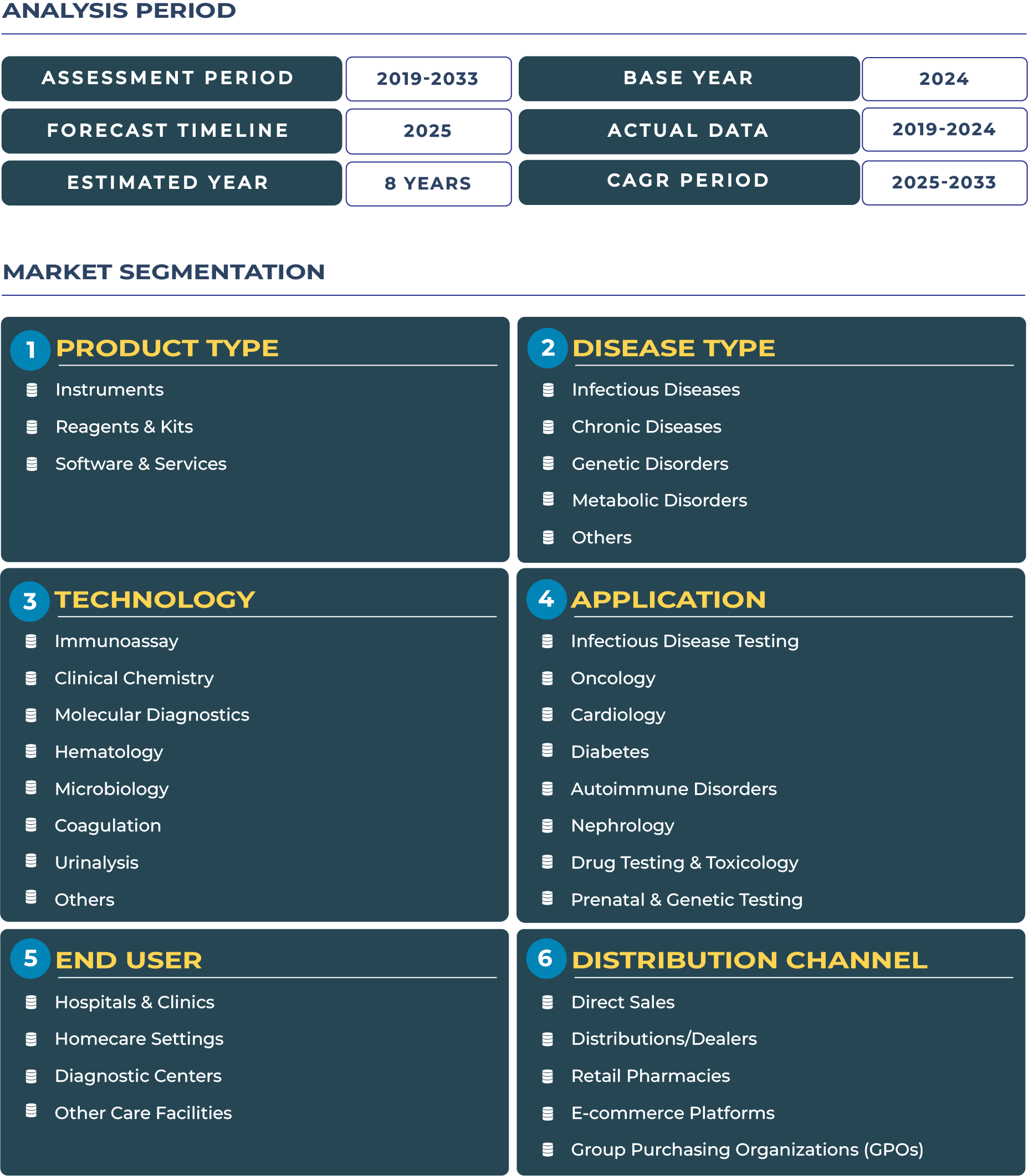
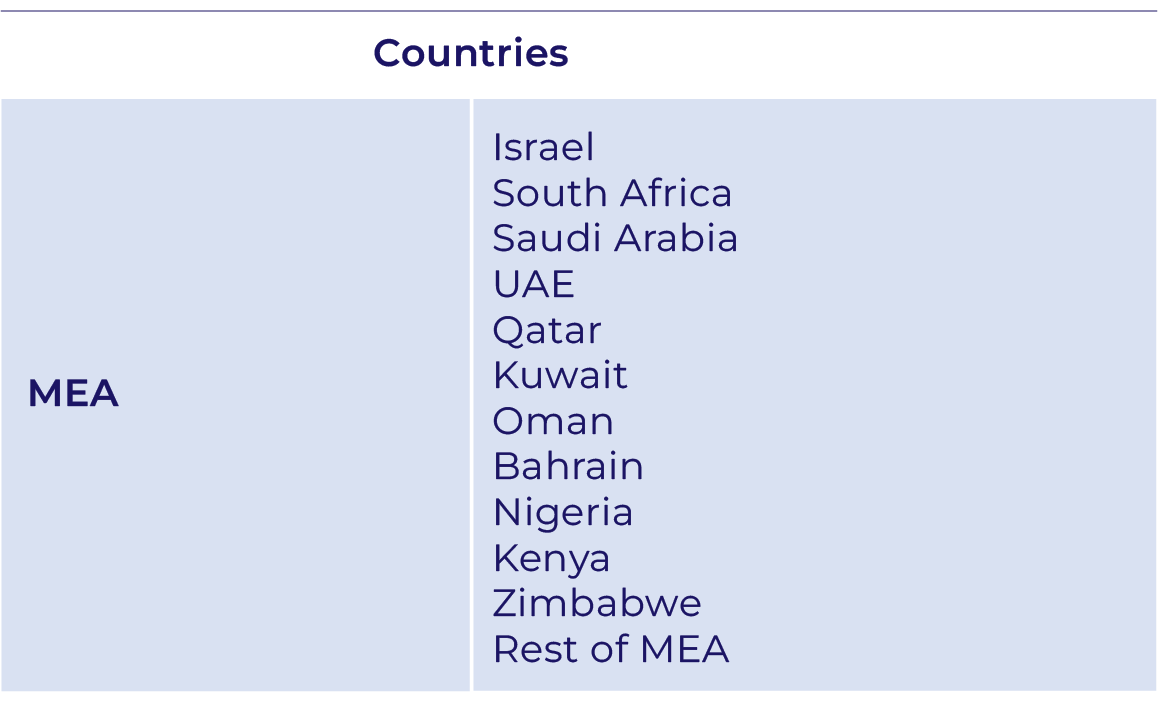
MEA In-vitro Diagnostic Market Countries Covered
Frequently Asked Questions
Public-private partnerships in MEA are driving accessibility, affordability, and technology transfer, enabling sustainable diagnostic infrastructure through co-investments and capacity-building initiatives.
Affordability challenges persist due to import dependency, limited local manufacturing, and fragmented payer systems that often lead to high out-of-pocket expenditure.
New hospital projects across GCC and African regions are integrating digital diagnostic laboratories, boosting reagent demand, and expanding healthcare testing coverage region-wide.
Related Reports

Poland PaaS Market Size | 2019-2033
- Report ID: IT1888 | Coverage: Country |
- Category: Information Technology | Sub-Category: Cloud Computing Technology |
- Published Date: Dec 2025 | US$495 |
Russia Private Banking Market Size | 2019-2033
- Report ID: BAF918 | Coverage: Country |
- Category: Banking and Finance | Sub-Category: Banking Services |
- Published Date: Oct 2025 | US$495 |
UAE Private Banking Market Size | 2019-2033
- Report ID: BAF979 | Coverage: Country |
- Category: Banking and Finance | Sub-Category: Banking Services |
- Published Date: Nov 2025 | US$495 |
Argentina AI Industrial Robotics Market Size | 2019-2033
- Report ID: IT1938 | Coverage: Country |
- Category: Information Technology | Sub-Category: Artificial Intelligence |
- Published Date: Nov 2025 | US$495 |
Poland PaaS Market Size | 2019-2033
- Report ID: IT1888 | Coverage:Country |
- Category:Information Technology | Sub-Category: Cloud Computing Technology |
- Published Date: Dec 2025 |US$495 |
Russia Private Banking Market Size | 2019-2033
- Report ID: BAF918 | Coverage:Country |
- Category:Banking and Finance | Sub-Category: Banking Services |
- Published Date: Oct 2025 |US$495 |
UAE Private Banking Market Size | 2019-2033
- Report ID: BAF979 | Coverage:Country |
- Category:Banking and Finance | Sub-Category: Banking Services |
- Published Date: Nov 2025 |US$495 |
Argentina AI Industrial Robotics Market Size | 2019-2033
- Report ID: IT1938 | Coverage:Country |
- Category:Information Technology | Sub-Category: Artificial Intelligence |
- Publishing Soon |US$495 |
Why Choose Us

24/5 Research Support
Get your queries resolved prior to and post purchasing research study

Customize As Per Specific Requirements
Get in-depth analysis based on your tailored research needs

Expertise in Tracking Niche Markets
Comprehensive view of latest technologies and opportunities across markets

360-Degree Analysis
Fact-based insights derived through supply & demand side analysis

Assured Quality
Deliver most accurate industry insights to maintain research quality

Information Security
Your confidential and personal data is secure and safe