
Nordics Diagnostic Imaging Devices Market Size and Forecast by Modality, Application, Technology, End User, and Portability: 2019-2033
Oct 2025
| Format:

 |
Pages: 110+
|
Type: Sub-Industry Report
|
Authors:
Mahesh Y
(Assistant Research Manager)
|
Pages: 110+
|
Type: Sub-Industry Report
|
Authors:
Mahesh Y
(Assistant Research Manager)
MARKET OUTLOOK
Nordics Diagnostic Imaging Devices Landscape: Leading with Sustainability and Digital Health Leadership
The Nordic region has emerged as a vanguard of sustainable healthcare infrastructure and digital transformation, a positioning that is now reshaping the diagnostic imaging devices market. With countries such as Sweden, Norway, Denmark and Finland operating advanced national e-health platforms and committing to eco-efficient procurement, the diagnostic imaging devices ecosystem is adapting to new paradigms of lower-radiation, energy-efficient imaging equipment, connected infrastructure and lifecycle services. Reflecting this shift, the market is projected to expand from approximately USD 617.7 million in 2025 to nearly USD 950.3 million by 2033, representing a robust CAGR of 5.5%, according to industry forecasting by DataCube Research. What differentiates the Nordics from other regions is the fusion of high healthcare spending per capita, advanced imaging adoption (such as high-field MRI and hybrid PET/CT), and institutional emphasis on sustainability, meaning the diagnostic imaging devices sector must deliver not only modality performance but also environmental and digital credentials.
In this environment, the diagnostic imaging devices sector in the Nordics is evolving beyond traditional capital-equipment sales. Hospitals and imaging centres demand solutions that integrate modality hardware with digital workflows, remote reading platforms and sustainable design attributes. Imaging vendors are thus challenged to optimise device energy consumption, reduce helium usage in MRIs, support remote servicing and offer lifecycle extension offerings aligned with Nordic values. The result: the diagnostic imaging devices industry in the region is not simply expanding in volume, but upgrading in quality, connectivity and sustainability orientation, positioning itself for long-term growth in a mature yet innovation-centric market.
Nordics Diagnostic Imaging Devices Market Outlook: Navigating the Nordics Diagnostic Imaging Devices Market Through Sustainability-Centric Growth and Digital Transformation
Looking ahead, the Nordics diagnostic imaging devices market is set for meaningful expansion driven by both infrastructure renewal and digital health strategy. Growth will be underpinned by replacement of ageing imaging fleets, especially in CT, MRI and ultrasound systems, coupled with investment in cloud-connected imaging archives, remote reading networks and data-driven workflow optimisation. The increasing prevalence of chronic disease in aging populations, alongside screening programmes and value-based care initiatives, further underlines need for advanced imaging capacity in the region.
The Nordic socio-economic context supports this growth. National healthcare systems across Scandinavian benefit from stable public funding, high digital-health maturity and strong procurement governance. Moreover, the region’s emphasis on sustainability means that imaging device purchases are increasingly evaluated not only on performance but on lifecycle emissions and energy efficiency. Although global supply-chain pressures, inflation in equipment costs and regional workforce constraints remain relevant, the coherent policy-framework around green procurement and digital readiness positions the market favorably for the forecast horizon.
Drivers & Restraints: The Forces Shaping the Nordics Diagnostic Imaging Devices Market’s Momentum and Constraints
Drivers: elevated investment, tele-imaging and integrated national health platforms
The Nordic region benefits from strong public healthcare investment per capita, enabling relatively early adoption of advanced imaging modalities and infrastructure refresh cycles. National e-health platforms, such as Sweden’s national health digital services network, facilitate imaging data exchange and remote diagnostics, which in turn increases utilisation of high-end imaging systems. Telemedicine penetration is high, and rural imaging initiatives in remote regions of Norway and Finland are driving demand for mobile imaging units or compact CT/ultrasound systems. Furthermore, sustainability mandates mean that hospitals are replacing older imaging devices with models that offer reduced power consumption, lower helium usage or recyclability credentials, adding impetus to procurement of next-generation imaging platforms.
Restraints: limited unit volumes, stringent procurement standards and sustainability compliance pressures
On the flip side, the Nordics present several structural constraints. Given the modest population sizes relative to large European economies, unit-volume opportunities for imaging devices are inherently smaller, this limits scale for vendors and may suppress aggressive pricing models. Procurement frameworks in Nordic countries are among the most stringent globally, requiring detailed lifecycle environmental assessments, strict energy-efficiency certifications and often multi-year servicing commitments. These conditions can lengthen sales cycles, raise compliance costs for manufacturers and act as barriers to entry. Additionally, while geopolitical tensions and supply-chain disruption affect device availability globally, the Nordics’ reliance on imports means that such upstream risks could impact procurement timelines and cost structures, thereby moderating adoption pace.
Trends & Opportunities: Emerging Currents and Strategic Openings in the Nordics Diagnostic Imaging Devices Ecosystem
Trend: sustainability-driven lifecycle management and cloud-native imaging deployment
A key trend in the Nordics diagnostic imaging devices space is the emphasis on imaging equipment lifecycle sustainability and cloud imaging integration. Healthcare systems in this region are increasingly demanding equipment that meets circular-economy criteria, from reduced material usage to recyclability and lower environmental footprint. Reports such as those by the Nordic Centre for Sustainable Healthcare underscore the rising focus on sustainable medical-device design. Simultaneously, hospitals are deploying cloud-native PACS (Picture Archiving and Communication System) and remote reading workflows, enabling multi-site image sharing and optimised modality utilisation across networked sites. This trend favours imaging-device suppliers who bundle hardware with cloud connectivity and service-based delivery models.
Opportunity: offering sustainability-certified systems and digital service bundles aligned with Nordic procurement regimes
From an opportunity perspective, vendors can differentiate in the Nordics by developing and marketing imaging platforms that carry sustainability certifications (e.g., low energy consumption, minimal helium in MRI, recyclable components) and pairing them with digital-health service bundles such as cloud-based image analytics, remote maintenance and lifecycle-extension programmes. Given the region’s emphasis on green procurement, imaging-device manufacturers can gain preferential access by aligning with national criteria for sustainable supply chains. Moreover, the relatively high digital maturity of Nordic health systems offers fertile ground for piloting hybrid business models (device + service + software) and forging partnerships with e-health vendors and regional diagnostic networks to scale these models region-wide.
Competitive Landscape: Strategic Moves Defining the Nordics Diagnostic Imaging Devices Sector
The competitive environment for diagnostic imaging devices in the Nordics reflects global players adapting to regional priorities around sustainability and digital services. For example, Siemens Healthineers announced in March 2025 the deployment of next-generation CT scanners at Stockholm hospitals, featuring enhanced dose-efficiency and remote-service capabilities, demonstrating alignment with Nordic imaging requirements. In parallel, GE HealthCare expanded MRI installations across Norwegian public and private hospitals in April 2025, investing in high-throughput units and service-network extensions. These developments illustrate how manufacturers are tailoring offerings, integrating software, servicing, remote diagnostics and sustainability credentials, to match Finland’s and Sweden’s procurement frameworks. Vendors that succeed will likely be those that deliver modality performance, device-lifecycle sustainability and digital service support, all aligning with the diagnostic imaging devices landscape in the Nordics.
In summary, the Nordics diagnostic imaging devices market presents a compelling opportunity for device manufacturers and service providers who can navigate the region’s unique blend of high-investment healthcare systems, sustainability-centric procurement and digital-health leadership. Over the forecast horizon to 2033, players aligned with these imperatives stand to capture meaningful value in this mature yet forward-looking market.
*Research Methodology: This report is based on DataCube’s proprietary 3-stage forecasting model, combining primary research, secondary data triangulation, and expert validation.
[Learn more]
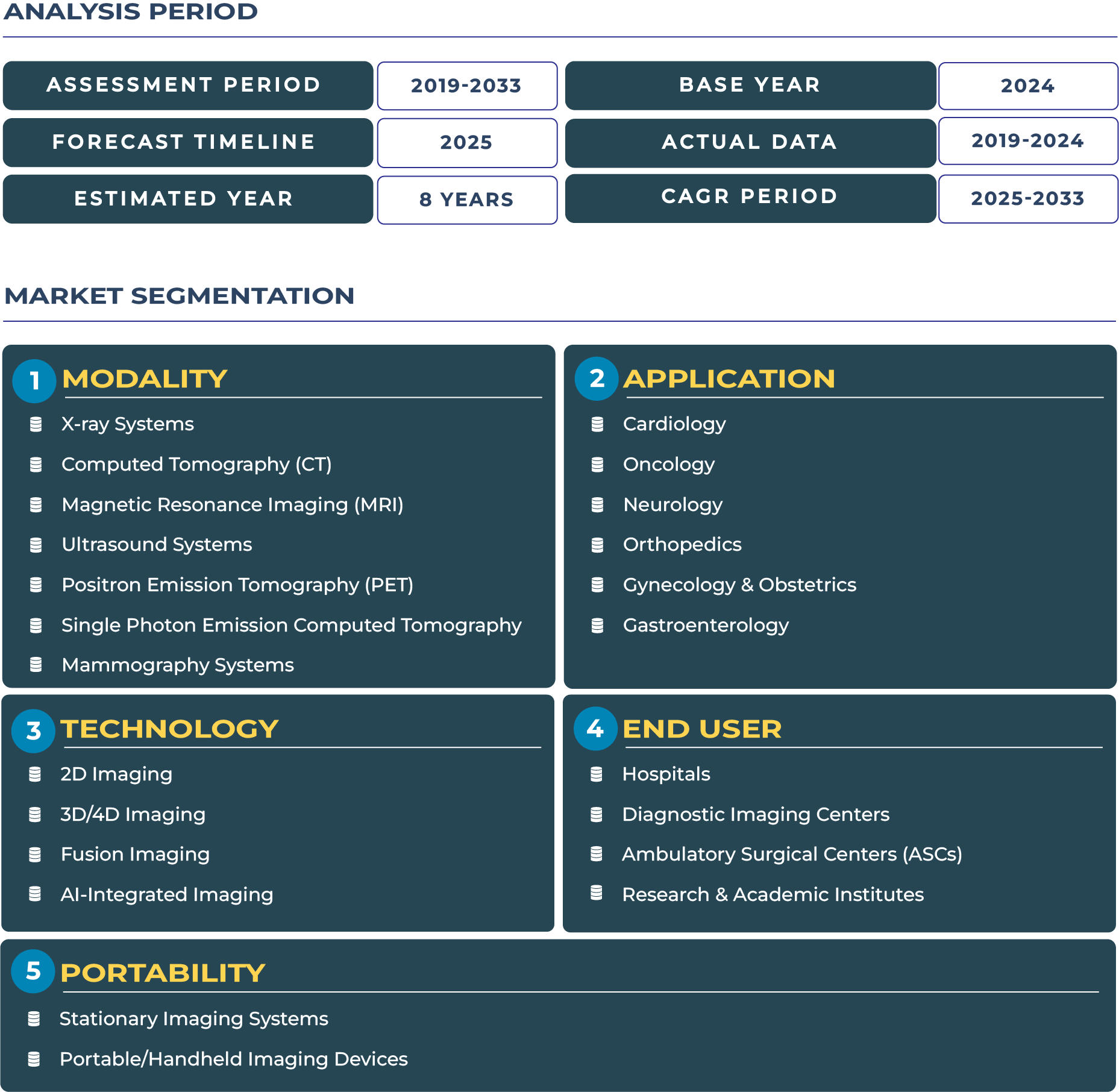
Nordics Diagnostic Imaging Devices Market Segmentation
Frequently Asked Questions
Green healthcare mandates in the Nordics are influencing imaging-device procurement decisions, with hospitals prioritising systems that deliver reduced energy consumption, support circular-economy reuse and have lower lifecycle emissions. This requirement elevates sustainability credentials to a competitive differentiator in the diagnostic imaging devices market.
Procurement frameworks in Nordic nations often include sustainability criteria, such as environmental labelling requirements, packaging minimisation and recyclability mandates, that affect imaging device tender scoring. Suppliers offering equipment with verified sustainability metrics benefit in the diagnostic imaging devices sector, aligning with public-sector goals and secure placements in national health-system tenders.
The Nordics are advancing cloud-native imaging platforms, enterprise-wide PACS/RIS solutions and remote reporting networks that span multiple care sites. These digital integrations enhance utilisation of imaging devices, enable mobile or outpatient imaging deployment and facilitate workflow efficiency. As a result, the diagnostic imaging devices ecosystem is shifting toward hardware-plus-software-based business models and service-oriented delivery.
Related Reports

North America Insurance Brokerage Market Size | 2019-2033
- Report ID: IAS63 | Coverage: Regional |
- Category: Insurance and Securities | Sub-Category: Insurance Brokerage |
- Published Date: Aug 2025 | US$1,345 |
Latin America Investment Banking Market Size | 2019-2033
- Report ID: BAF865 | Coverage: Regional |
- Category: Banking and Finance | Sub-Category: Banking Services |
- Published Date: Oct 2025 | US$1,345 |
Qatar Rural Banking Market Size | 2019-2033
- Report ID: BAF965 | Coverage: Country |
- Category: Banking and Finance | Sub-Category: Banking Services |
- Published Date: Oct 2025 | US$495 |
Peru Diagnostic Imaging Devices Market Size | 2019-2033
- Report ID: HEA351 | Coverage: Country |
- Category: Healthcare | Sub-Category: Medical Devices |
- Published Date: Nov 2025 | US$495 |
GCC AI Image Recognition Market Size | 2019-2033
- Report ID: IT1984 | Coverage: Regional |
- Category: Information Technology | Sub-Category: Artificial Intelligence |
- Published Date: Dec 2025 | US$1,345 |
Turkey Diagnostic and Monitoring Devices Market Size | 2019-2033
- Report ID: HEA420 | Coverage: Country |
- Category: Healthcare | Sub-Category: Medical Devices |
- Published Date: Dec 2025 | US$495 |
North America Insurance Brokerage Market Size | 2019-2033
- Report ID: IAS63 | Coverage:Regional |
- Category:Insurance and Securities | Sub-Category: Insurance Brokerage |
- Published Date: Aug 2025 |US$1,345 |
Latin America Investment Banking Market Size | 2019-2033
- Report ID: BAF865 | Coverage:Regional |
- Category:Banking and Finance | Sub-Category: Banking Services |
- Published Date: Oct 2025 |US$1,345 |
Qatar Rural Banking Market Size | 2019-2033
- Report ID: BAF965 | Coverage:Country |
- Category:Banking and Finance | Sub-Category: Banking Services |
- Published Date: Oct 2025 |US$495 |
Peru Diagnostic Imaging Devices Market Size | 2019-2033
- Report ID: HEA351 | Coverage:Country |
- Category:Healthcare | Sub-Category: Medical Devices |
- Published Date: Nov 2025 |US$495 |
GCC AI Image Recognition Market Size | 2019-2033
- Report ID: IT1984 | Coverage:Regional |
- Category:Information Technology | Sub-Category: Artificial Intelligence |
- Publishing Soon |US$1,345 |
Turkey Diagnostic and Monitoring Devices Market Size | 2019-2033
- Report ID: HEA420 | Coverage:Country |
- Category:Healthcare | Sub-Category: Medical Devices |
- Publishing Soon |US$495 |
Why Choose Us

24/5 Research Support
Get your queries resolved prior to and post purchasing research study

Customize As Per Specific Requirements
Get in-depth analysis based on your tailored research needs

Expertise in Tracking Niche Markets
Comprehensive view of latest technologies and opportunities across markets

360-Degree Analysis
Fact-based insights derived through supply & demand side analysis

Assured Quality
Deliver most accurate industry insights to maintain research quality

Information Security
Your confidential and personal data is secure and safe