
Spain Insurance Brokerage Market Size and Forecast by Brokerage Type, Insurance Type, Service Offering, Client Type, Distribution Channel, Revenue Model, and End User: 2019-2033
Aug 2025
| Format:

 |
Pages: 110+
|
Type: Industry Report
|
Authors:
Jayson Gomes
(Manager – BFSI)
|
Pages: 110+
|
Type: Industry Report
|
Authors:
Jayson Gomes
(Manager – BFSI)
MARKET OUTLOOK
Spain Insurance Brokerage Market Outlook
Navigating Volatility with Hybrid Delivery Models and Catastrophe-Ready Solutions
Spain insurance brokerage industry is undergoing a strategic realignment as it grapples with persistent economic volatility, moderate household savings, and shifting consumer behavior. The growing preference for hybrid insurance distribution models—combining traditional in-person advisory with omnichannel platforms—is reshaping the insurance brokerage ecosystem. Amid high inflation, rising unemployment, and regional economic disparity, brokers are leaning toward modular service delivery, customized policies, and blockchain-powered platforms to ensure claims transparency and trust.
The integration of flexible digital workflows, catastrophe risk advisory, and targeted micro-insurance schemes has positioned commercial and independent brokers at the center of Spain’s insurance brokerage market recovery. This change has gained significance with Spain’s exposure to climate-related catastrophes, including floods and wildfires in Andalusia and Catalonia. The deployment of catastrophe preparedness consulting services, powered by real-time geospatial risk data, is increasing client retention and improving brokerage margins.
As of 2025, the Spain insurance brokerage market is estimated to be valued at USD 17.3 billion and is projected to reach USD 26.1 billion by 2033, growing at a CAGR of 5.2% during the forecast period (2025–2033). This sustained growth trajectory is largely driven by Spain’s burgeoning gig economy, growing insurance literacy, and demand for digital-first services, especially in urban regions like Madrid, Barcelona, and Valencia.
Resilient Catalysts Fueling Market Expansion: Group Plans and the Rise of the Gig Worker
Spain’s insurance brokerage sector is benefitting from strong demand for group insurance products, particularly from SMEs in sectors such as hospitality, tourism, and construction. Employers are increasingly turning to commercial brokers to secure competitively priced group health, liability, and life insurance packages amid rising public healthcare wait times. This surge in B2B brokerage activity is reinforced by Spain’s economic diversification efforts and policy-level focus on formalizing the SME workforce.
Another pivotal driver is the country’s fast-expanding gig economy, which now accounts for approximately 17% of the labor force. Independent workers, freelancers, and platform-based service providers are increasingly seeking customizable insurance coverage—ranging from health to income protection—pushing retail brokers and insurtech-aligned independent brokers to innovate offerings tailored to this underserved demographic.
Furthermore, Spain’s insurance penetration is gaining traction as insurance literacy improves through digital education campaigns and regulatory mandates. The consolidation of microinsurance platforms and embedded insurance through e-commerce and banking channels is opening new frontiers for retail brokers. These collective drivers are expanding the broker-client interface and fostering stronger client loyalty through continuous advisory engagement.
Growth Frictions in a Digital Battlefield: Broker Margins and Microenterprise Gaps
Despite promising growth signals, the Spain insurance brokerage market is confronting operational headwinds. One pressing concern is the mounting competition from fully digital insurers and bancassurance channels, which are increasingly disintermediating traditional brokers. These digital-first players offer algorithm-driven underwriting and instant claims processing, appealing particularly to tech-savvy millennials and Gen Z policyholders.
Moreover, many microbusinesses in Spain—especially in rural areas and low-income provinces—remain underinsured. A lack of awareness about commercial risk coverage, coupled with minimal broker presence outside urban centers, continues to hinder penetration in this segment. Captive brokers face limitations in diversifying their portfolio, especially when tied to legacy product lines that don’t align with emerging insurance needs such as cyber liability or climate impact.
In addition, operational overhead and legacy IT systems hamper scalability for traditional firms. Many retail brokers are burdened by outdated CRM systems and regulatory compliance requirements that restrict their agility. To maintain relevance, brokers must embrace system upgrades and integrate more agile analytics and advisory tools to match customer expectations in an increasingly dynamic risk environment.
Blockchain, Borderless Advisory, and the Evolution of Trust in Brokerage Services
Technology adoption is redefining Spain’s insurance brokerage landscape. One of the most transformative trends is the integration of blockchain-based claims processing systems that enhance policyholder transparency, fraud prevention, and trust. By deploying smart contracts and decentralized verification mechanisms, brokers are able to streamline high-frequency insurance claims—particularly in auto, travel, and health segments—leading to improved customer satisfaction.
Cross-border brokerage services are also on the rise as Spanish insurers seek expansion across EU markets and Latin America. Wholesale brokers are increasingly handling complex reinsurance and niche segment placements for multinational clients operating in renewable energy, logistics, and agriculture. This trend is fueled by Spain’s strategic position within the EU and its cultural and trade ties with Latin America.
Independent brokers are also investing in multilingual customer support, integrated digital dashboards, and hyper-personalized offerings to serve expatriates, tourists, and digital nomads—particularly in cities like Malaga and Alicante. This blend of global outreach and local presence is helping brokers gain competitive advantage by offering a 360-degree risk advisory framework.
New Opportunities in Niche Lines: Pet Protection and Climate Risk Consulting Gain Traction
With evolving consumer expectations and climate vulnerabilities, new insurance niches are emerging in the Spanish market. Pet insurance has grown significantly, driven by the increasing number of pet-owning households and rising veterinary care costs. Retail brokers are expanding their digital channels to promote wellness-centric pet policies, offering embedded coverage through grooming and veterinary chains.
Another high-growth segment is catastrophe preparedness and climate risk advisory. Given Spain’s exposure to climate risks like droughts, floods, and wildfires, brokers are expanding consulting services that help businesses assess environmental liabilities and integrate risk resilience into their insurance portfolios. Commercial brokers are working closely with reinsurers to offer parametric insurance products that activate payouts based on predefined climate conditions, particularly in agriculture and tourism sectors.
These niche segments are expected to bolster market competitiveness and provide new revenue streams for brokers willing to diversify beyond conventional auto and life insurance lines.
Regulatory Oversight and Compliance Trends Shaping Brokerage Practices in Spain
Spain’s insurance brokerage sector is governed by the Directorate-General for Insurance and Pension Funds (DGSFP), which has increased compliance requirements in line with the EU’s Insurance Distribution Directive (IDD). In recent years, the DGSFP has focused on consumer protection, transparency in policy terms, and suitability assessments, pushing brokers to elevate advisory quality.
Digital transformation has also prompted regulatory updates on data protection and cybersecurity under Spain’s implementation of the General Data Protection Regulation (GDPR). Brokers must now maintain rigorous protocols for storing and processing customer information, especially with the rise in biometric and behavioral data usage in underwriting.
Additionally, ESG integration into financial services has triggered a new wave of compliance standards. Brokers are now required to disclose the sustainability profile of investment-linked insurance products, further driving advisory excellence. These evolving regulatory dynamics are encouraging brokers to adopt compliance automation tools and transparent advisory frameworks to remain competitive.
Macroeconomic and Demographic Signals Steering Market Resilience
The insurance brokerage market in Spain is significantly shaped by underlying economic and demographic dynamics. Spain’s unemployment rate, projected at 11.4% for 2025 (IMF), impacts insurance affordability among the youth and low-income groups, prompting demand for modular and short-term coverage schemes. In response, brokers are offering fractional insurance plans with dynamic pricing models, especially for gig workers and freelancers.
Simultaneously, the country’s household savings rate, hovering around 7.9% of disposable income (OECD, 2024), reflects limited financial cushioning, compelling brokers to promote bundled coverage packages that offer cost savings without compromising protection. Brokers are leveraging embedded insurance distribution across retail, fintech, and telecom platforms to increase reach.
Urbanization is another key driver, with over 81% of Spain’s population residing in cities. This urban concentration supports the growth of omnichannel brokerage models and localized catastrophe risk consulting, particularly in regions exposed to seasonal floods or extreme heat events. These factors together reinforce the strategic necessity of adaptive, tech-enabled, and customer-centric brokerage services.
Adaptive Strategies and Hybrid Models Dominate the Competitive Arena
The competitive landscape of the Spanish insurance brokerage sector is led by both domestic giants and global players. Prominent firms such as MAPFRE, Aon Spain, Willis Towers Watson, Howden Iberia, and Marsh operate across the retail and commercial spectrum, offering customized advisory, risk management, and reinsurance services.
To address Spain’s economic uncertainties and evolving consumer demands, leading firms are investing in hybrid distribution models. For instance, in February 2024, MAPFRE Spain implemented an omni-channel approach by integrating WhatsApp for Business with its physical branches, enabling seamless communication, claims submissions, and product upselling across both digital and physical touchpoints.
Smaller independent brokers are emphasizing specialization in niche verticals such as cyber liability, ESG advisory, pet wellness, and parametric agriculture insurance. These firms are leveraging real-time risk analytics, white-label platforms, and strategic partnerships with insurtech startups to differentiate their offerings.
Strategic mergers and acquisitions are also becoming prominent, with international firms acquiring regional brokers to expand geographic presence and client base in underserved provinces. These developments signify a shift toward scalability, integration, and service personalization within the insurance brokerage ecosystem.
Conclusion: Forging the Future of Insurance Brokerage Through Flexibility and Innovation
Spain insurance brokerage market is transforming rapidly, driven by macroeconomic uncertainty, demographic shifts, and evolving customer expectations. The emergence of hybrid service models, blockchain-enhanced claims systems, and catastrophe-focused consulting underscores the sector’s adaptability. While traditional models face disruption from digital competitors, opportunities in gig economy coverage, pet protection, and ESG advisory present a compelling growth narrative.
The industry’s ability to integrate omnichannel delivery, leverage regulatory modernization, and tap into underinsured niches will determine the long-term trajectory of brokerage firms across the country. Strategic foresight, technical agility, and customer-centric innovation remain the cornerstone of future success in the Spanish insurance brokerage landscape.
*Research Methodology: This report is based on DataCube’s proprietary 3-stage forecasting model, combining primary research, secondary data triangulation, and expert validation.
[Learn more]
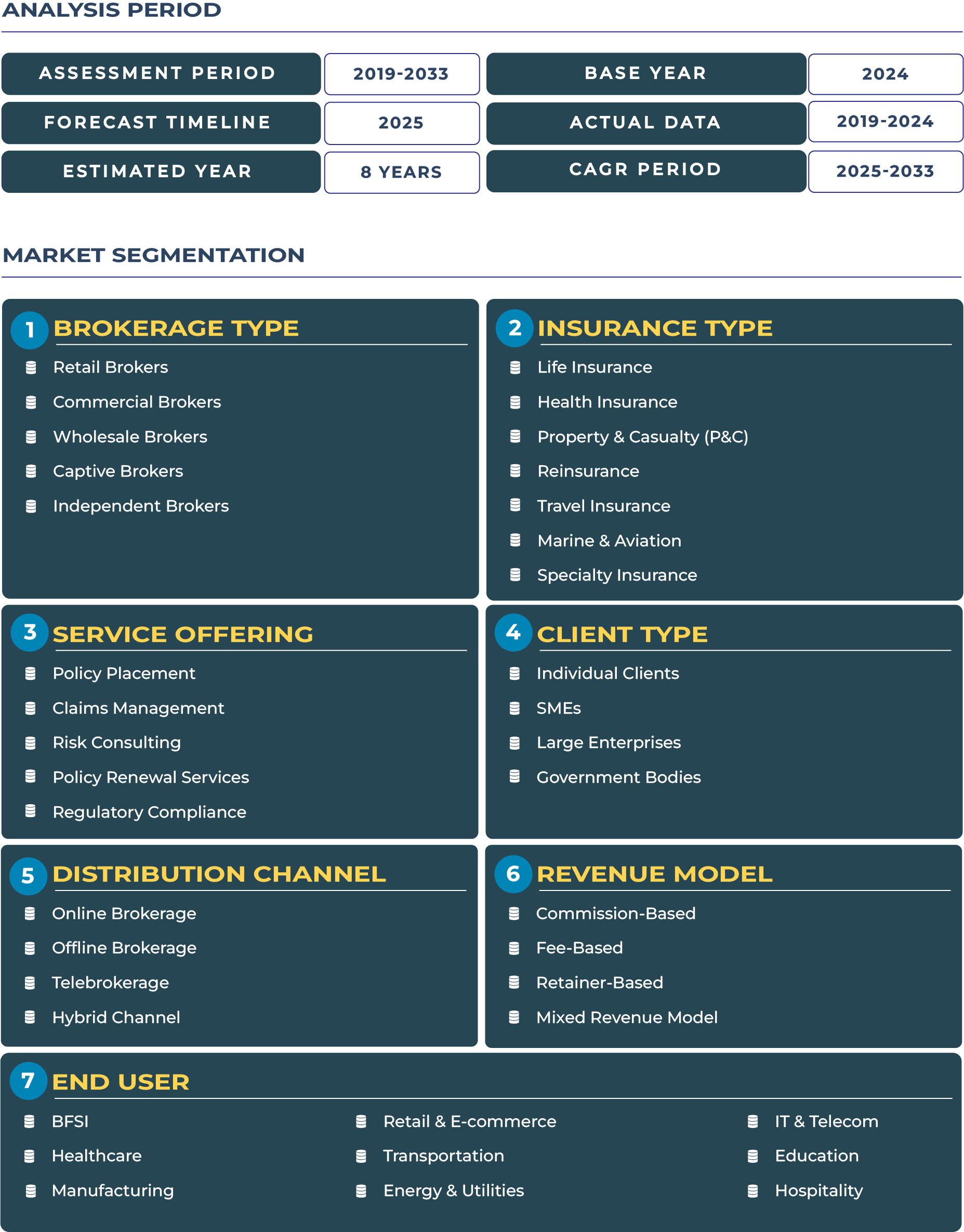
Spain Insurance Brokerage Market Segmentation
Frequently Asked Questions
Omnichannel platforms in Spain are enabling insurance brokers to offer a seamless customer experience by integrating digital communication tools like WhatsApp, mobile apps, and video consultations with traditional physical branches. This approach ensures continuous client engagement, especially in urban areas with diverse customer profiles.
Blockchain technology is increasingly being adopted in Spain’s insurance sector to enhance claims transparency, prevent fraud, and automate claim settlements through smart contracts. Brokers using blockchain can ensure faster, verified, and dispute-free payouts, strengthening client trust and operational efficiency.
The rise of climate-related risks and a growing gig economy have compelled brokers to diversify services. Catastrophe preparedness consulting is helping clients mitigate property and environmental risks, while tailored insurance products for gig workers are expanding broker relevance in Spain’s evolving employment landscape.
Related Reports

MEA Generative AI ASICs Market Size | 2019-2033
- Report ID: SEM232 | Coverage: Regional |
- Category: Semiconductors | Sub-Category: AI Chips |
- Published Date: Dec 2025 | US$1,345 |
France Fintech-enabled Neobanking Market Size | 2019-2033
- Report ID: BAF516 | Coverage: Country |
- Category: Banking and Finance | Sub-Category: FinTech |
- Published Date: Jan 2026 | US$495 |
Latin America Diabetes Care Devices Market Size | 2019-2033
- Report ID: HEA192 | Coverage: Regional |
- Category: Healthcare | Sub-Category: Medical Devices |
- Published Date: Sep 2025 | US$1,345 |
Asia Pacific Orthopedic Devices Market Size | 2019-2033
- Report ID: HEA227 | Coverage: Regional |
- Category: Healthcare | Sub-Category: Medical Devices |
- Published Date: Oct 2025 | US$1,345 |
ASEAN Orthopedic Devices Market Size | 2019-2033
- Report ID: HEA228 | Coverage: Regional |
- Category: Healthcare | Sub-Category: Medical Devices |
- Published Date: Oct 2025 | US$1,345 |
MEA Generative AI ASICs Market Size | 2019-2033
- Report ID: SEM232 | Coverage:Regional |
- Category:Semiconductors | Sub-Category: AI Chips |
- Publishing Soon |US$1,345 |
France Fintech-enabled Neobanking Market Size | 2019-2033
- Report ID: BAF516 | Coverage:Country |
- Category:Banking and Finance | Sub-Category: FinTech |
- Publishing Soon |US$495 |
Latin America Diabetes Care Devices Market Size | 2019-2033
- Report ID: HEA192 | Coverage:Regional |
- Category:Healthcare | Sub-Category: Medical Devices |
- Published Date: Sep 2025 |US$1,345 |
Asia Pacific Orthopedic Devices Market Size | 2019-2033
- Report ID: HEA227 | Coverage:Regional |
- Category:Healthcare | Sub-Category: Medical Devices |
- Published Date: Oct 2025 |US$1,345 |
ASEAN Orthopedic Devices Market Size | 2019-2033
- Report ID: HEA228 | Coverage:Regional |
- Category:Healthcare | Sub-Category: Medical Devices |
- Published Date: Oct 2025 |US$1,345 |
Why Choose Us

24/5 Research Support
Get your queries resolved prior to and post purchasing research study

Customize As Per Specific Requirements
Get in-depth analysis based on your tailored research needs

Expertise in Tracking Niche Markets
Comprehensive view of latest technologies and opportunities across markets

360-Degree Analysis
Fact-based insights derived through supply & demand side analysis

Assured Quality
Deliver most accurate industry insights to maintain research quality

Information Security
Your confidential and personal data is secure and safe