
Benelux Diagnostic Imaging Devices Market Size and Forecast by Modality, Application, Technology, End User, and Portability: 2019-2033
Oct 2025
| Format:

 |
Pages: 110+
|
Type: Sub-Industry Report
|
Authors:
Mahesh Y
(Assistant Research Manager)
|
Pages: 110+
|
Type: Sub-Industry Report
|
Authors:
Mahesh Y
(Assistant Research Manager)
MARKET OUTLOOK
Benelux’s Unified Imaging Horizon: Innovations in Cross-Border Diagnostic Integration
The Benelux region, comprising Belgium, the Netherlands and Luxembourg, has become a compelling frontier for the diagnostic imaging devices landscape, driven notably by its emphasis on cross-border interoperability and health-data integration across national systems. Within this environment, the diagnostic imaging devices market in the Benelux is forecast to scale from around USD 704.9 million in 2025 to approximately USD 1,000.3 million by 2033, assuming a compound annual growth rate (CAGR) of 4.5% as projected by DataCube Research. Such growth is supported by the region’s interconnected healthcare networks, robust imaging infrastructure and regulatory environments that foster innovation in modalities including advanced CT, MRI and ultrasound devices as integrated diagnostic platforms.
In this context, the diagnostic imaging devices industry in Benelux is undergoing transformation: the ecosystem is shifting away from purely hospital-based modality procurement toward interconnected radiology networks spanning multiple countries, where imaging data flows freely and diagnostic workflows are optimised across national borders. This cross-border integration supports asset sharing, remote reading services and multi-site imaging strategies, elevating demand for device manufacturers to offer not just hardware but interoperable, network-centric imaging solutions. Furthermore, the strong per-capita healthcare spending and high penetration of imaging equipment in Benelux underpin the sector’s readiness for upgrade cycles and digital refresh of imaging fleets, making this region a strategic priority for vendors targeting Europe’s imaging-device market landscape.
Benelux Diagnostic Imaging Devices Market Outlook: Navigating the Benelux Diagnostic Imaging Devices Sector Through Interoperability and Infrastructure Renewal
The outlook for the Benelux diagnostic imaging devices market is anchored in structural demand for imaging capacity, digital workflow enhancements and cross-national procurement dynamics. With the base-year estimate and an end-point projection for 2033, the projected CAGR reflects the region’s steady advancement rather than explosive expansion. Key performance drivers include imaging-device lifecycle replacement, adoption of image-intensive modalities such as high-field MRI and hybrid PET/CT systems, and investment in cloud-enabled infrastructure that supports remote diagnostics and multi-site connectivity.
Benelux’s political and economic environment adds a layer of stability favourable to capital-intensive imaging device procurement. All three countries operate within EU regulation frameworks, enabling shared procurement models and interoperable systems. That said, the region is not entirely insulated from external headwinds, geopolitical tensions, supply-chain disruptions post-pandemic and regulatory shifts pertaining to global sourcing all exert pressure on procurement cost-bases and vendor access. Notably, the EU’s evolving procurement rules impacting device sourcing may influence vendor strategies and alignment. The imaging-device sector must therefore accommodate not only equipment sales but also services, training and remote support, creating new value streams in the Benelux landscape.
Growth Impetus and Market Constraints: What’s Driving the Benelux Diagnostic Imaging Devices Market, and What’s Slowing It?
Growth drivers: premium healthcare spending and research-rich ecosystem
Benelux stands out for its above-average per-capita healthcare expenditure; for example, the Netherlands spent USD 6,804 per capita in 2024, placing it among the top five EU countries. This level of investment underpins strong demand for state-of-the-art imaging devices. Moreover, academic hospital networks in the region are highly consolidated and serve as innovation hubs for clinical imaging and digital workflows. Regulatory openness, particularly in the Netherlands and Belgium, for clinical pilots of advanced imaging and workflow optimisation creates a favourable environment for device manufacturers to introduce high-end CT, MRI and ultrasound platforms paired with software services. The region’s emphasis on integrating imaging IT across hospital networks further elevates the ecosystem’s appetite for diagnostic imaging devices that deliver connectivity, analytics and enterprise-grade performance.
Market restraints: small individual national markets and procurement fragmentation
Despite its advantages, the Benelux region presents unique structural constraints. Each country remains modest in market size, which means device vendors must tailor pricing and distribution strategies for Belgium, the Netherlands and Luxembourg individually rather than assuming one large homogeneous market. Further, even though cross-border collaboration is conceptually well advanced, public-procurement frameworks remain largely national or regional, and deployment timelines may lag across autonomous networks. Added to this, supply-chain sensitivities, heightened by the EU’s tighter procurement policies around sourcing and localisation, introduce risk for global imaging device providers. These factors moderate the pace of adoption and require vendors to adopt bespoke market-entry and service models for Benelux diagnostics equipment sales.
Emerging Trends & Strategic Opportunities: Mapping the Future of Benelux Diagnostic Imaging Devices Ecosystem
Trend: networked imaging IT and outpatient modality deployment
A prominent trend in Benelux is the proliferation of imaging IT platforms that enable real-time sharing of multi-modality images across hospital networks and outpatient centres. For instance, radiology units are leveraging enterprise PACS/RIS solutions to integrate CT, MRI and ultrasound studies across sites, streamlining workflows and accelerating diagnosis. Mobile deployment of imaging systems, particularly ultrasound and compact CT units, is gaining traction in outpatient and ambulatory settings within the Netherlands and Belgium, catering to decentralised diagnostics and reducing pressure on tertiary hospitals. The convergence of modality upgrades and imaging IT enhancements positions the region diagnostic imaging devices sector for enhanced productivity and value realisation.
Opportunity: consortium pricing and academic-industry collaborations for device incumbents
For vendors, the Benelux market offers strategic opportunities if they align with its integrated healthcare mandate. One key opportunity lies in establishing cross-border service agreements and consortium pricing models by collaborating with multi-hospital networks across Belgium, the Netherlands and Luxembourg. Another lies in partnership with academic medical centres for imaging-device pilots and validation of advanced modalities or workflow software. These collaborations enhance device differentiation and facilitate procurement from pro-innovation health systems. Additionally, vendors that offer modular service contracts spanning device, software and remote analytics may capture preferential placement in tender processes shaped by interoperability and outcomes-based procurement criteria.
Competitive Dynamics: Strategic Moves Defining the Benelux Diagnostic Imaging Devices Sector
The competitive landscape for diagnostic imaging devices in the Benelux region is characterised by a combination of global OEMs and regional integration strategies. For example, FUJIFILM Healthcare Europe established a consolidated commercial group for Belgium, the Netherlands and Luxembourg, effective March 2023, thereby signalling intensified focus on the Benelux market and tailored imaging-device servicing operations. Additionally, major imaging firms are adapting business models toward subscription-based service contracts, remote scanning support and enterprise imaging platform integrations that meet Benelux network expectations. Vendors emphasise connectivity, workflow optimisation and total cost of ownership (TCO) reductions to gain competitive advantage. With procurement increasingly shaped by regional interoperability and value-based criteria, device manufacturers need to align their offerings accordingly to succeed in Benelux diagnostic imaging devices market ecosystem.
Overall, the diagnostic imaging devices landscape in Benelux presents a mature yet evolving market, one where modality upgrades, interconnected imaging IT platforms and regional collaboration converge to create growth opportunities. Device vendors that tailor their strategies to the region’s unique cross-border infrastructure, premium healthcare spending and networked diagnostics will find fertile ground for sustainable value capture through 2033.
*Research Methodology: This report is based on DataCube’s proprietary 3-stage forecasting model, combining primary research, secondary data triangulation, and expert validation.
[Learn more]
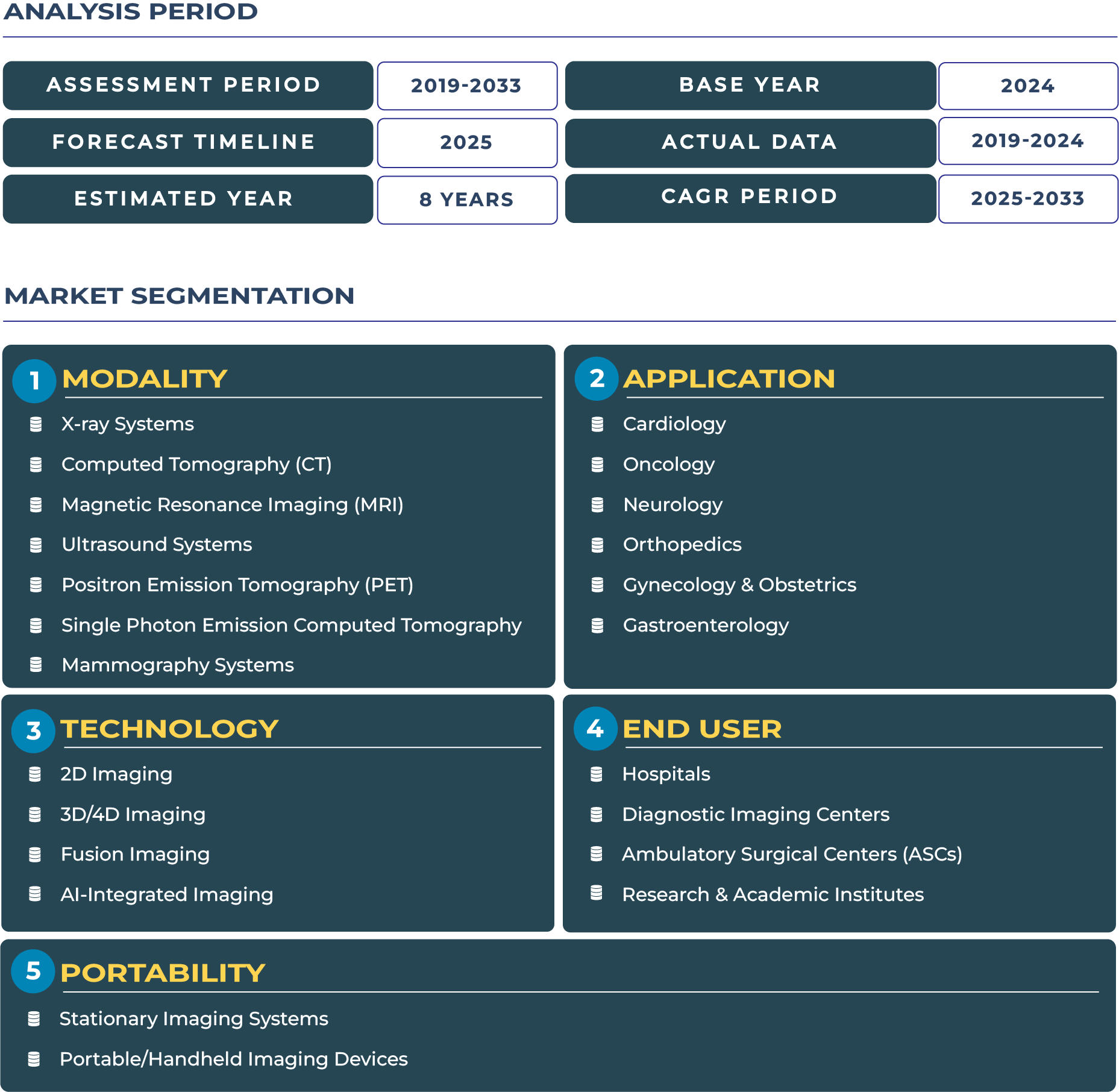
Benelux Diagnostic Imaging Devices Market Segmentation
Frequently Asked Questions
The Benelux region leverages close proximity of Belgium, the Netherlands and Luxembourg, shared regulatory frameworks, and interoperable imaging networks to enable cross-border diagnostics, shared radiology services and multi-site imaging deployments, factors that enhance device utilisation, workflow efficiency and cost-effectiveness in the diagnostic imaging devices market.
Hospitals and imaging centres in Benelux are increasingly adopting enterprise-wide imaging platforms and networked diagnostic infrastructure that span multiple sites. This enables faster image sharing, remote diagnostic reporting and integrated modality workflows, thereby improving turnaround times, maximising modality utilisation and enhancing the value proposition of diagnostic imaging devices in the ecosystem.
In Benelux, advanced imaging developments include increased deployment of high-field MRI systems, hybrid nuclear-imaging platforms, mobile imaging units for outpatient use, and modular device-software bundles that include advanced ultrasound or CT coupled with analytics and remote support. These trends reflect the region’s focus on workflow optimisation and integration of the diagnostic imaging devices sector with broader health-technology platforms.
Related Reports

Zimbabwe SaaS Market Size | 2019-2034
- Report ID: IT1872 | Coverage: Country |
- Category: Information Technology | Sub-Category: Cloud Computing Technology |
- Published Date: Dec 2025 | US$495 |
Taiwan Investment Banking Market Size | 2019-2033
- Report ID: BAF864 | Coverage: Country |
- Category: Banking and Finance | Sub-Category: Banking Services |
- Published Date: Oct 2025 | US$495 |
Bahrain Rural Banking Market Size | 2019-2033
- Report ID: BAF964 | Coverage: Country |
- Category: Banking and Finance | Sub-Category: Banking Services |
- Published Date: Oct 2025 | US$495 |
Argentina Diagnostic Imaging Devices Market Size | 2019-2033
- Report ID: HEA350 | Coverage: Country |
- Category: Healthcare | Sub-Category: Medical Devices |
- Published Date: Nov 2025 | US$495 |
Argentina AI Image Recognition Market Size | 2019-2033
- Report ID: IT1983 | Coverage: Country |
- Category: Information Technology | Sub-Category: Artificial Intelligence |
- Published Date: Dec 2025 | US$495 |
Bahrain Diagnostic and Monitoring Devices Market Size | 2019-2033
- Report ID: HEA419 | Coverage: Country |
- Category: Healthcare | Sub-Category: Medical Devices |
- Published Date: Dec 2025 | US$495 |
Zimbabwe SaaS Market Size | 2019-2034
- Report ID: IT1872 | Coverage:Country |
- Category:Information Technology | Sub-Category: Cloud Computing Technology |
- Published Date: Dec 2025 |US$495 |
Taiwan Investment Banking Market Size | 2019-2033
- Report ID: BAF864 | Coverage:Country |
- Category:Banking and Finance | Sub-Category: Banking Services |
- Published Date: Oct 2025 |US$495 |
Bahrain Rural Banking Market Size | 2019-2033
- Report ID: BAF964 | Coverage:Country |
- Category:Banking and Finance | Sub-Category: Banking Services |
- Published Date: Oct 2025 |US$495 |
Argentina Diagnostic Imaging Devices Market Size | 2019-2033
- Report ID: HEA350 | Coverage:Country |
- Category:Healthcare | Sub-Category: Medical Devices |
- Published Date: Nov 2025 |US$495 |
Argentina AI Image Recognition Market Size | 2019-2033
- Report ID: IT1983 | Coverage:Country |
- Category:Information Technology | Sub-Category: Artificial Intelligence |
- Publishing Soon |US$495 |
Bahrain Diagnostic and Monitoring Devices Market Size | 2019-2033
- Report ID: HEA419 | Coverage:Country |
- Category:Healthcare | Sub-Category: Medical Devices |
- Publishing Soon |US$495 |
Why Choose Us

24/5 Research Support
Get your queries resolved prior to and post purchasing research study

Customize As Per Specific Requirements
Get in-depth analysis based on your tailored research needs

Expertise in Tracking Niche Markets
Comprehensive view of latest technologies and opportunities across markets

360-Degree Analysis
Fact-based insights derived through supply & demand side analysis

Assured Quality
Deliver most accurate industry insights to maintain research quality

Information Security
Your confidential and personal data is secure and safe